
You get home tired. The sink's full of plates from breakfast, the bathroom sink has toothpaste in it, and you and your housemate are both sure the other person was going to deal with it. Nothing's dirty in a serious way. The home just slipped by small amounts all day.
That's what what chores should be done daily really comes down to. Not a perfect house. A short list of small, timed jobs with a named owner, done at the same point each day so mess doesn't compound. Most of these take two to ten minutes. Skip them and Saturday becomes a rescue operation.
Start with risk and use, not appearance. Food surfaces, dishes, spills, shared bathrooms and high-touch points earn a daily slot. Dusting, whole-home vacuuming and deep appliance cleans don't. Recent UK data shows only 34% of adults disinfect frequently touched surfaces at least daily, according to UKCPI's YouGov survey of hygiene habits, which is exactly why prioritising matters more than adding tasks.
The nine jobs below are the daily essentials. Everything else belongs on a weekly or monthly list.
Table of Contents
- 1. Making the Bed
- 2. Washing Up or Loading the Dishwasher
- 3. Wiping Kitchen Counters and Stovetop
- 4. Sweeping or Spot-Vacuuming High-Traffic Floors
- 5. Ten-Minute Tidy of Common Areas
- 6. Emptying Bins and Managing Recycling
- 7. Quick Bathroom Reset
- 8. Sorting and Running a Load of Laundry
- 9. Airing Out Rooms
- How the Daily Household Chores Compare on Time, Timing and Purpose
- Turn Your Daily Chores Into a Routine That Actually Sticks
1. Making the Bed
Make the bed before you leave the bedroom. Pull the sheet flat, shake out the duvet, set the pillows straight. It takes two to three minutes, and the room immediately looks handled even if a chair still has clothes on it.
A simple duvet cover with no extra throws or decorative pillows cuts the time in half. If you're wrestling with layers every morning, you'll quit by week two. Pair it with opening the curtains so the two actions become one habit.
Navy Admiral William H. McRaven made this point in his 2014 University of Texas commencement speech. He urged graduates to make their beds as a first small accomplishment of the day. The logic holds at home. One finished task makes the next one easier to start.
Who Owns It
Each person makes their own bed. That's the rule that works in shared homes, for couples and for kids old enough to pull up a duvet. No rotation, no negotiation, no one checking.
- Best time: Straight after getting up, before phone or shower
- Typical use case: A couple sharing a bed splits it, one side each, which takes under a minute
- Common mistake: Airing the bed for an hour and never coming back to it

Don't aim for hotel corners. Aim for done every day.
2. Washing Up or Loading the Dishwasher
Dishes are where shared homes argue. Not because they're hard, but because they repeat three times a day and nobody agreed who owns them. Left in the sink, food hardens, smells build, and a five minute job becomes twenty.
Use a dishwasher-first rule if you have a machine. Every plate, glass and utensil goes straight in as it's used, rinsed only if it carries thick residue. Run it when it's full, usually in the evening, and empty it in the morning so it's ready again.
Food safety sets the deadline here. The U.S. Department of Agriculture guidance on leftovers and food safety advises refrigerating perishable food and cooked leftovers within 2 hours, or within 1 hour above 90°F (32°C). So meal cleanup isn't just tidiness. Clear leftovers into shallow containers, refrigerate them, and wash the utensils that touched them.
Practical rule: The cook doesn't wash up. Whoever didn't cook clears, loads and wipes the sink.
That split is covered in more depth in this guide to splitting chores fairly with roommates. Agree it once and you stop renegotiating nightly.
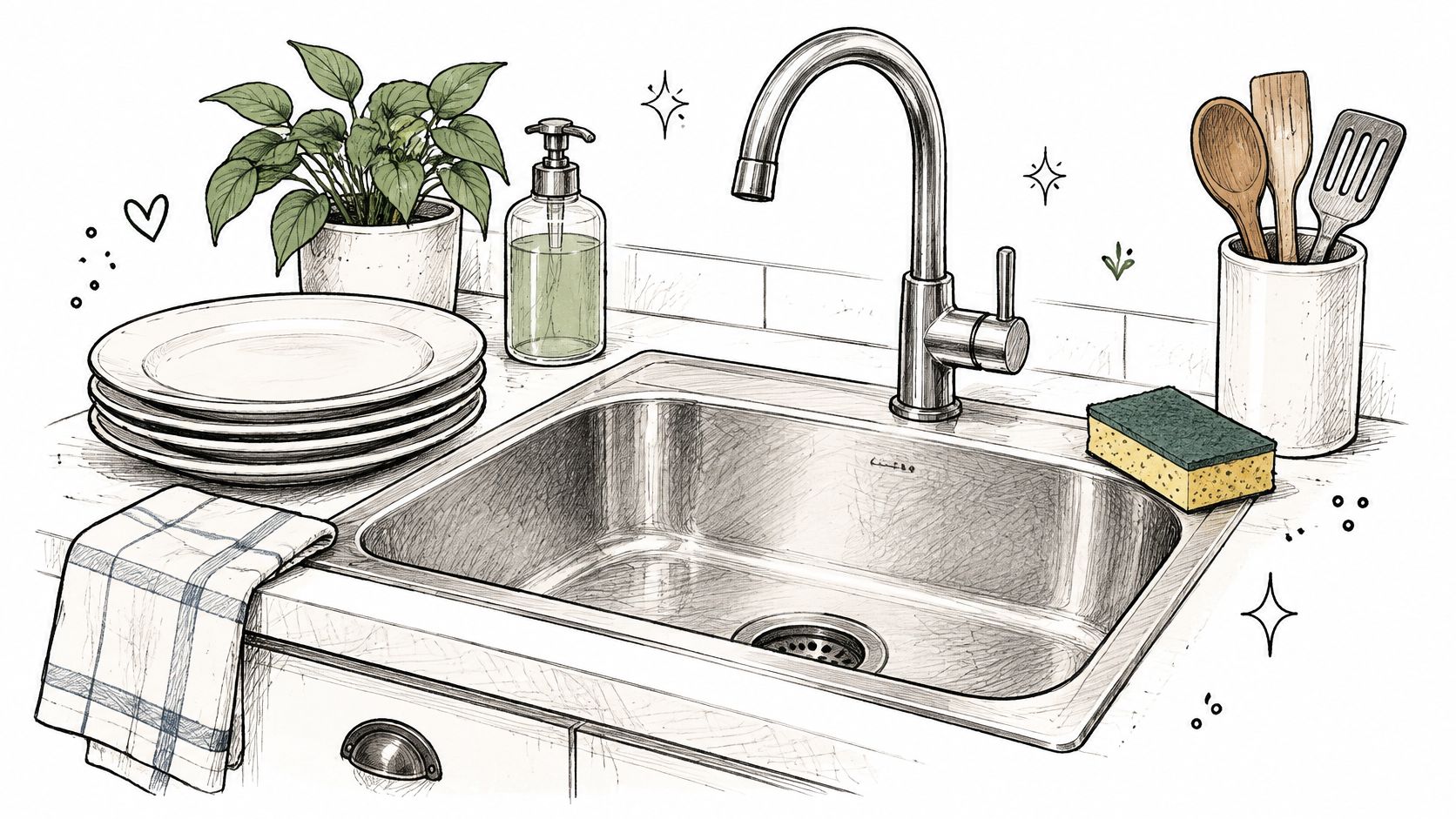
Hand washing a meal's dishes takes five to eight minutes if you start right away. Soak pans while you eat. You'll thank yourself.
3. Wiping Kitchen Counters and Stovetop
Wipe counters and the stovetop right after cooking, while the surface is still slightly warm but safe to touch. Grease lifts easily then. Wait until morning and you're scrubbing a hardened film off the hob.
This is a hygiene job, not a cosmetic one. The CDC guidance on when and how to clean and disinfect your home identifies countertops, light switches and doorknobs as high-touch surfaces to clean regularly and after visitors. In a kitchen, add cabinet handles, the fridge door and tap handles to that pass.
You don't need to disinfect everything daily. Soap, water or a suitable household cleaner handles routine cleaning. Save disinfectant for illness in the house or raw meat spills.
A Two Minute Method
Spray, wait briefly, wipe with a clean microfibre cloth, then dry. Keep a separate cloth for food surfaces. Don't use the same one you wiped the floor spill with.
Say you've fried eggs and made toast. Crumbs swept into your hand, spray on the splash zone behind the hob, one wipe across the counter, done. Keep the spray and cloth by the sink where you'll see them. Stored under the sink behind bottles, they won't get used.
Check the manufacturer's guidance before using abrasive cleaners on stone worktops or induction glass. The wrong product does permanent damage fast.
4. Sweeping or Spot-Vacuuming High-Traffic Floors
Don't vacuum the whole house daily. You won't keep it up, and you don't need to. Sweep or spot-vacuum only the paths people walk. That's the kitchen, entryway and hallway, plus under the dining table if kids eat there.
A quick pass takes five minutes with a broom or handheld vacuum kept near the kitchen. Start at the far end of the room and work toward the exit so you don't walk dirt back over clean floor. Empty the dustpan properly instead of leaving a line of grit by the bin.
Pet hair changes the maths. A household with a shedding dog may need the living room added to the daily route during moulting season. Adjust by use, not by a fixed list.
- Broom or stick vacuum: Best for hard floors and crumb zones after dinner
- Robot vacuum on a schedule: Works well for the main walking areas if floors stay clear
- Kids with zones: One child owns the entryway, another the dining area, each a two minute job
The typical failure is equipment stored far away. If the vacuum lives in a cupboard under the stairs behind coats, the daily pass dies. Keep a small broom in the kitchen corner.
5. Ten-Minute Tidy of Common Areas
Set a timer for ten minutes in the evening and reset the shared rooms. Return items to their rooms, fold the throw, clear the coffee table, put shoes by the door. When the timer ends, you stop. That limit is what makes people willing to start.
Families often run this before dinner or before bed. Roommates do a nightly living room reset so nobody wakes up to someone else's mess. Either time works. Pick one and keep it fixed.
A chore schedule that shows what is due today helps here because the tidy is easy to forget and easy to assume someone else did. Assign a different common area to each person on different days if one room is heavier than the others.

Make It Finite
Use a landing basket for items that constantly end up on surfaces. Post, chargers, toys and hair ties go in the basket during the tidy, then get sorted weekly. Without a home, clutter just moves from table to sofa.
Ten minutes daily beats an hour on Saturday. Nobody dreads ten minutes.
Don't deep clean during the tidy. You're resetting, not scrubbing. If you start organising drawers, the habit won't survive a busy week.
6. Emptying Bins and Managing Recycling
Check bins every evening. The kitchen bin usually needs emptying daily in a family home, every other day for a couple. Food waste sitting overnight in a warm kitchen draws flies and smells by morning.
Tie the bag, take it straight outside, and put a fresh liner in immediately. Leaving an unlined bin guarantees the next person throws wet waste into it. Keep spare liners under the sink or, better, store a few at the bottom of the bin itself.
Recycling works when sorting is effortless at the point of use. Labelled containers near the back door beat one mixed box you sort on collection day. Rinse tins and jars briefly. That reduces odour and contamination that can get a whole load rejected.
- Evening check: Kitchen food bin, bathroom bin, recycling that's full
- Collection days: Set a reminder the night before, not the morning of
- Local rules: Check your council's guidance, since accepted plastics vary widely
Say collection is Tuesday morning. The bin goes out Monday after dinner as part of the kitchen shutdown. Assign that to one named person. Rotating weekly is fine, but vague shared responsibility means a missed collection and two weeks of overflow.
7. Quick Bathroom Reset
A shared bathroom needs three to five minutes daily. Wipe the sink and taps, clear toothpaste residue, check the toilet seat and flush handle, and hang towels straight so they dry. The deep clean stays weekly.
Think in exposure tiers. CDC environmental cleaning procedures specify high-touch surfaces such as light switches, countertops, sinks and cupboard doors at least once every 24 hours in a clinical medication-preparation area. Your home isn't clinical, but the principle transfers. Surfaces touched repeatedly by several people get daily attention. Low-touch surfaces don't.
Keep a spray and cloth in the bathroom itself. If supplies live in the kitchen, you'll skip it. Never mix bleach with ammonia or acidic cleaners. That combination produces dangerous gas.
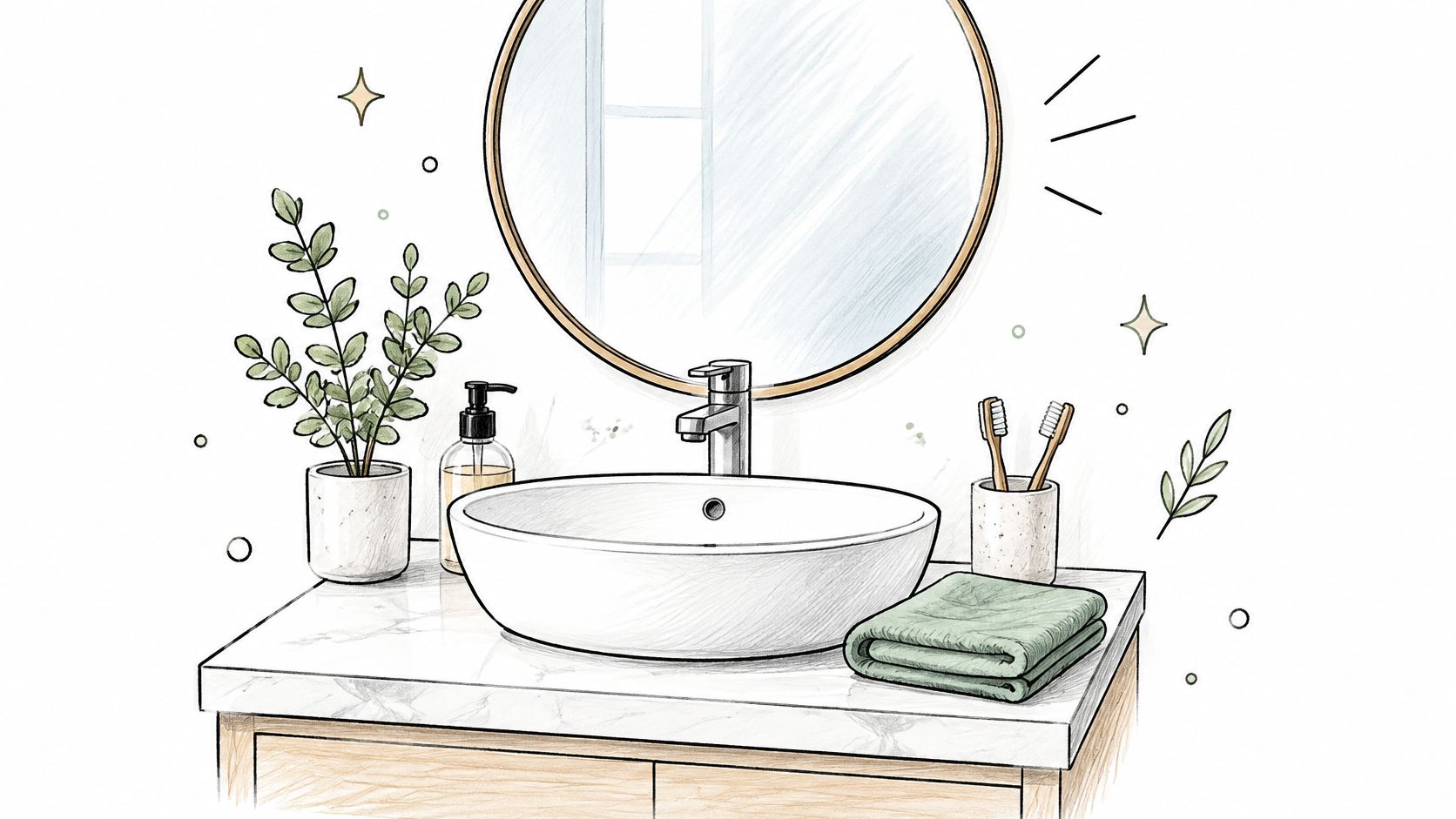
Couples often split this. One person handles the toilet, the other the sink and mirror, alternating weekly. Squeegee shower glass after use and you'll rarely need the methods in this guide to removing hard water stains from glass shower doors.
Ventilate after cleaning. Humidity left trapped feeds mould on grout and sealant.
8. Sorting and Running a Load of Laundry
Laundry is daily only for some households. Families with young children, uniforms, sport kits or pets often need a load a day, or near it. A single person or couple can usually run two or three loads a week. Be honest about which household you are.
The daily part isn't always a wash. It's the sorting and moving. Gather dirty clothes into labelled baskets by person or by wash type, check pockets, and start a load when a basket is full. Running half loads daily wastes water and energy.
A workable rhythm looks like this. Load the machine in the morning, hang or tumble dry at lunch or after work, fold for ten minutes in the evening. Each step is short. The pile forms when one step stalls, usually the folding.
Watch a demonstration of an efficient sorting and folding routine here.
Split the Stages
One person sorts and washes. Another folds and puts away. Splitting by stage stops one person owning laundry end to end, which is a common source of resentment.
Check care labels before washing anything new. Empty the machine promptly. Damp laundry left sitting develops a mildew smell that a rewash doesn't always fix.
9. Airing Out Rooms
Open windows for a few minutes each morning. Bedrooms especially. Overnight you have breathed out moisture into a closed room, and bedding holds it. Fresh air clears stale smells and helps condensation dry off windows.
Cross-ventilation works fastest. Open windows on opposite sides of the home when weather allows and air moves through in minutes. In winter, a short wide-open burst loses less heat than a window cracked for hours, because walls and furniture retain their warmth.
Kitchens and bathrooms need air during and after use, not just in the morning. Run the extractor fan while cooking and leave it running afterwards. Do the same during and after showers. Grease and steam settle on walls and ceilings if you don't.
- Bedrooms: Windows open while you make the bed and dress
- Bathroom: Fan on, door open after showering if there's no window
- Kitchen: Extractor on before the pan gets hot, not after steam fills the room
- High pollution days: Check local air quality guidance before opening windows wide
This is the cheapest chore on the list, and the one people notice most when they walk in. A home that smells fresh feels cleaner than it is. The trade-off is pollen season. If someone has hay fever, air rooms early or late when pollen counts are lower, and keep bedroom windows shut at night.
How the Daily Household Chores Compare on Time, Timing and Purpose
Every figure below is a realistic daily pass. The tidy is capped at ten minutes because the limit is what makes it work, and the rest are short enough to slot between other jobs.
| Item | Typical Time | Best Time of Day | Best For |
|---|---|---|---|
| Making the Bed | 2–3 minutes | Morning, after getting up | A quick bedroom reset |
| Washing Up or Loading the Dishwasher | 5–8 minutes | After meals | Keeping dishes and the kitchen ready to use |
| Wiping Kitchen Counters and Stovetop | A few minutes | After cooking or eating | Clearing food residue and keeping prep areas clean |
| Sweeping or Spot-Vacuuming High-Traffic Floors | About 5 minutes | Before or after meals | Removing debris from busy walkways |
| Ten-Minute Tidy of Common Areas | 10 minutes | Before dinner or bedtime | Preventing clutter in shared spaces |
| Emptying Bins and Managing Recycling | 1–2 minutes | When bins are full or before collection | Controlling odours and keeping waste sorted |
| Quick Bathroom Reset | 3–5 minutes | Any convenient daily routine | Keeping frequently touched bathroom surfaces clean |
| Sorting and Running a Load of Laundry | About 10 minutes of hands-on work | Morning or another convenient time | Keeping clothes available and laundry piles manageable |
| Airing Out Rooms | A few minutes | Morning, and during or after cooking or showers | Reducing stale air, odours, and moisture |
Read the Best Time column as a trigger. Dishes follow meals, bins go out the night before collection, windows open while the kettle boils. Laundry's ten minutes is hands-on time only; the machine runs while you do something else. In a shared home, the natural owner is usually the person already at the trigger. The cook wipes the counters. The first one up airs the bedrooms. The person who cooks least takes the jobs with no fixed trigger, like floors and bins.
Turn Your Daily Chores Into a Routine That Actually Sticks
Don't adopt all nine jobs tomorrow. You'll manage three days, miss two, and drop the lot. Pick three that fix your biggest daily friction. For most shared homes that's dishes, kitchen counters and the ten-minute tidy, because those are the ones everyone sees and argues about.
Give each chore a named owner and a fixed time. Not "someone should do the dishes in the evening." Instead, "Alex loads the dishwasher after dinner, Sam empties it before breakfast." Specific beats fair-sounding. Vague agreements are where resentment grows.
Fairness is bigger than task counts. The U.S. Bureau of Labor Statistics American Time Use Survey reports 81% of people engaged in household activities on an average day, with women averaging 2.8 hours on days they did them versus 2.1 hours for men. Equal numbers of chores can still leave one person doing all the noticing, planning and following up. So assign ownership properly. The owner notices the job, does it, and confirms it's done. That removes the second invisible job of chasing.
Build the system to survive a bad week. Decide in advance what your minimum routine is when someone's ill, travelling or working late. I'd keep dishes, food waste and the bathroom reset, and let beds, floors and airing slide for a few days. A smaller routine you do beats a complete one you abandon.
Keep It Visible
Put the list where the work happens or in an app everyone shares. In Benny we let each chore be one-off or recurring, set it room by room with a timer and a named person, and send a reminder when it's due, so the schedule shows what's due today and what's still waiting. A paper list on the fridge works too. What matters is that everyone sees the same list and nobody has to remember it for the household.
Hold a short weekly check-in, five minutes, same day each week. Ask three things. What's not getting done, what's taking longer than expected, and what should move to weekly. Adjust without blame. Chore loads shift with work schedules, school terms and seasons, and a list that can't change will break.
Rotate the unpleasant jobs monthly. Bins and toilets breed quiet resentment when one person owns them forever. Rotation also means everyone knows how each job is done, which helps when someone's away.
Write your list today. Three chores, three owners, three fixed times. Run it for two weeks, then review it once with fresh eyes. Add a fourth chore only if the first three have become automatic. That's how a routine sticks. Not through willpower, but through small jobs, clear ownership and a list short enough that nobody dreads looking at it.
Put your three starting chores into Benny today, set each one to recur daily with a timer and a named owner, and let reminders carry the remembering for your household. You'll see what's due, what's done and what's waiting in one shared list, and completed chores earn Sponge Points toward your virtual hamster.