Damp-dust hard surfaces and vacuum floors weekly, wash sheets and pillowcases weekly to every two weeks, and wash a regularly used blanket about monthly. If allergies or asthma are in play, move sheets and pillowcases to a weekly hot wash at about 130 degrees Fahrenheit, or 54 degrees Celsius.
Most advice about how often should you clean your bedroom gives you one number for the whole room, usually weekly, and judges the job by whether the room looks tidy. That single number is the problem. A bed, a carpet, and a nightstand collect different things at different speeds, and the person sleeping there changes what matters most. A room can look perfect with the duvet pulled straight while the sheets under it have not been washed in a month.
Run each task on its own clock instead. Set those clocks by allergen exposure, not appearance. Sheets sit against skin all night, carpets and upholstered chairs trap settled dust, and a mattress stores what you can't shake out. Once you treat those as separate jobs with separate intervals, the routine gets shorter, clearer, and much easier to keep.
Table of Contents
- How Often Each Bedroom Task Needs Cleaning
- Tighter Timing When Allergies or Asthma Are in Play
- Signals That Change the Schedule
- Three Bedrooms and the Weeks That Fit Them
- How Common Sheet Habits Compare
- Lock the Routine Into Repeating Reminders
How Often Each Bedroom Task Needs Cleaning
Start with the column that matches the sleeper, not the room. If you're generally healthy, use the standard interval. If whoever sleeps there has a dust-mite allergy or asthma, use the tighter column for every task, not just the sheets. Don't blend the two by washing bedding weekly but letting a dusty carpet sit for a month.
| Task | Standard interval | Allergy or asthma interval | Why this clock |
|---|---|---|---|
| Make the bed and air the room | Daily | Daily | Movement stirs settled dust |
| Damp-dust hard surfaces | Weekly | Weekly or more often | Dry dusting sends particles back into the air |
| Vacuum floors and upholstered furniture | Weekly | Weekly with a HEPA vacuum | Carpets and soft chairs hold settled dust |
| Wash sheets and pillowcases | Weekly to every 2 weeks | Weekly at about 130 F (54 C) | The bed is the highest mite exposure |
| Wash blanket, comforter, or mattress pad | About monthly | Weekly with the sheets when allergy guidance applies | Bulky bedding traps skin flakes |
| Vacuum the mattress | A few times a year if encased | Every 1 to 3 months if uncovered | An open mattress is a dust reservoir |
| Keep relative humidity in check | Below 50% when you can | Below 50% | Drier air is less favorable to dust mites |
The Daily Two Minutes
Make the bed and open a window for a few minutes each morning. Getting up, stripping covers back, and straightening the duvet stirs settled dust into the air you then breathe while dressing. Airing the room at that moment clears some of it instead of letting it settle back onto the pillow. This isn't deep cleaning, and it doesn't replace washing anything. It's a quick reset that keeps the weekly jobs small.
The Weekly Pass
Damp-dust nightstands, shelves, dresser tops, and the headboard once a week. Use a microfiber cloth wrung out so it's barely damp, not dripping. A dry duster or old T-shirt mostly moves fine particles off the surface and into the air. Work top to bottom so anything you knock loose lands on a surface you haven't done yet.
Vacuum on the same day, right after dusting. Do carpet or hard floors, the strip beside and under the bed, and any upholstered chair, bench, or headboard with a fabric attachment. The EPA-supported guidance summarized in the AAA guide to bedding hygiene identifies weekly sheet washing, frequent carpet and furniture vacuuming, and regular dusting of hard surfaces as routine controls, and notes that vacuuming reduces the total amount of household dust even when it doesn't change the allergen concentration in each gram. That's the honest trade-off. You're lowering the overall load in the room, not sterilizing it.
Practical rule: Dust first with a damp cloth, vacuum second. Reversing the order leaves freshly settled dust sitting on a clean floor until next week.
Wash sheets and pillowcases weekly to every two weeks if you're healthy, don't sweat heavily, and don't share the bed with a pet. Weekly is the safer default if any of those change. Use the warmest wash the care label allows and dry bedding fully before it goes back on the bed. Damp sheets folded into a cupboard undo the point of washing them.
The Slower Clocks
Wash a regularly used blanket or comforter about monthly. Bulky layers trap skin flakes and dust, but they don't sit directly against your face the way a pillowcase does, so they don't need the sheet schedule for most sleepers. If your machine struggles with a full comforter, use a laundromat's larger drum rather than cramming it in. A half-washed, still-damp comforter is worse than waiting a few days for a proper wash.
Vacuum the mattress on the slowest clock. If it's inside a zippered encasement, a few times a year during seasonal cleans is enough, since the cover does the blocking work. If it's uncovered, shorten that interval, especially in a carpeted room or one with pets. Use an upholstery tool in overlapping passes and spend extra time where heads and shoulders rest.
Humidity is a task too, even though it doesn't look like cleaning. A small hygrometer on the nightstand tells you where you stand. When indoor relative humidity sits high night after night, every other interval has to work harder. Keep it lower where you can with ventilation or a dehumidifier, and the weekly pass holds longer between visits.
Tighter Timing When Allergies or Asthma Are in Play
If you have a dust-mite allergy or asthma, the weekly clock on bedding stops being a suggestion and becomes the baseline. Clean the highest-exposure materials every week and stop saving effort for a rare deep clean. Bedding rebuilds its allergen load between sessions, and you sleep in it every night in the meantime. Small weekly work beats heroic occasional work here.
The American Academy of Allergy, Asthma & Immunology statement on environmental allergen avoidance reports that mite-allergen exposure is substantially greater in bedding than elsewhere in the home, recommends washing sheets, pillowcases, blankets, and mattress pads at least weekly, and finds that washing can cut bedding allergen exposure by roughly 100- to 1,000-fold within a month. Those numbers explain why the bed, not the bookshelf, gets first claim on your time.
Heat, Detergent, and the Label
Wash with detergent in water around 54.4 degrees Celsius, or 130 degrees Fahrenheit, or hotter where the care label permits. Check the label before you crank the dial, because some mattress pads and blankets shrink or break down at that heat. If a blanket can't take hot water, replace it with one that can, rather than washing it cold forever and wondering why symptoms persist.
Guidance on exact temperature varies a little between sources. The National Asthma Council Australia guidance on dust mites identifies the bed as the area of greatest dust-mite exposure and recommends weekly washing above 60 degrees Celsius, equivalent to 140 degrees Fahrenheit. Follow your fabric label and your clinician's advice where the figures differ. The direction is identical either way. Weekly, hot, and with detergent.
A blanket that can't survive a hot weekly wash doesn't belong on an allergy bed. Swap the fabric, don't soften the routine.
Encasements Do the Quiet Work
Fit impermeable, zippered encasements on the mattress and pillows. They block mites and their particles from moving between the mattress interior and the sleeper, which is the part vacuuming can't reach. With encasements in place, the lower allergen levels a month of weekly washing produces hold longer between washes. That's the closest thing this routine has to a buy-once fix. I would buy encasements before upgrading anything else in the room.
Vacuum floors weekly with a HEPA-filter vacuum, and give the area around and under the bed extra passes, since skin flakes and settled dust collect there. If the mattress stays uncovered, vacuum it every 1 to 3 months. For allergy sleepers, humidity control matters more than it does for everyone else, because drier air is less favorable to dust mites. Aim for indoor relative humidity below 50% when feasible. A dehumidifier with a built-in humidistat holds that target overnight without any attention from you.
Timing the Work Itself
Vacuuming and dusting briefly put fine particles back into the air, even done carefully. So don't vacuum at 10 p.m. and climb into bed ten minutes later. Clean earlier in the day, open a window while you work, and let the room settle before bedtime. Damp dusting and HEPA filtration reduce the problem. Timing costs nothing.
This intensity is aimed at allergy-sensitive sleepers, pet-owning households, carpeted bedrooms, and rooms with visible dust. A healthy sleeper on hard floors doesn't need to hot-wash blankets weekly. Matching effort to exposure is the whole point.
Signals That Change the Schedule
Each bedroom task runs on its own clock, and a signal tells you which clock to move. Start from your baseline and shorten only the intervals tied to what changed. I'd rather shift one interval and watch it for a few weeks than tighten the whole list at once, because a blanket change hides which fix worked and adds jobs that never needed doing.
A pet joining the bed moves the sheet clock. It says nothing about the mattress clock.
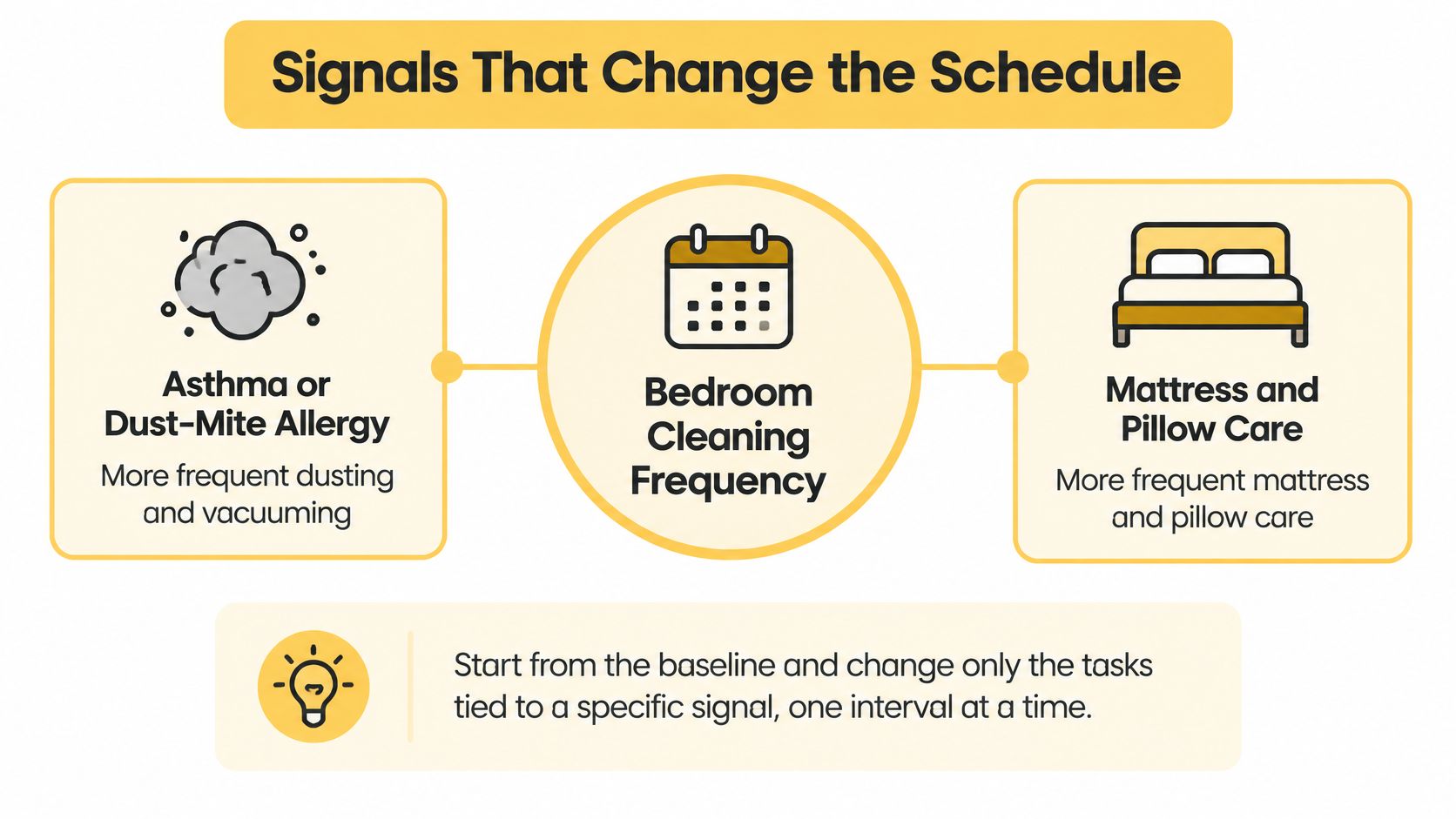
| Signal | Change | What to adjust | Leave alone |
|---|---|---|---|
| Dog or cat on the bed | Speed up | Sheets weekly and extra vacuum while shedding | Monthly blanket rule if the blanket stays off the pet |
| Illness or heavy night sweats | Short burst | One extra sheet wash, then the old gap | Mattress schedule |
| Dust visible again within a few days | Speed up | Damp-dust and vacuum twice a week until it stays clear | Hot-wash temperature |
| Symptoms flare while cleaning | Change method | Ventilate, damp cloth, HEPA, not right before sleep | Do not drop the weekly pass |
| Encasements, low clutter, humidity under 50% | Ease deep work | Mattress vacuum a few times a year | Weekly dust, vacuum, and sheet rhythm |
| Guest room rarely used | Ease daily work | Skip daily making; wash sheets before the next stay | A vacuum before the room is shut |
Signals That Speed Things Up
A pet on the bed adds dander and hair to the dust your weekly pass already removes, so sheets go weekly and the floor gets an extra vacuum during heavy shedding. After illness or a run of night sweats, add one extra hot sheet wash, then go back to the old gap. One reset wash covers the event. A three-day cold hasn't earned a permanently shorter interval.
Dust that returns within a few days is telling you something. The usual causes are carpet, heavy curtains, open shelves, or a nearby road, all loading the room faster than a weekly pass clears it. Damp-dust and vacuum twice a week until surfaces stay clear between sessions, then test weekly again. The American Lung Association briefing on dust and dust mites notes that dust mites are detectable in roughly four out of five U.S. homes in at least one bed, and one housing intervention that reduced bedroom humidity cut dust-mite allergen reservoirs in beds and carpets by more than 96%. Ventilation belongs on the schedule.
Signals That Change the Method, Not the Interval
If cleaning sets off your symptoms, the interval can stay. Skipping the job guarantees a bigger load next week. Keep the weekly vacuuming of carpets and upholstered furniture, the frequent damp dusting, and the weekly hot bedding wash. What changes is how the work gets done: a different hour, a damper cloth, a HEPA-filter vacuum, and enough settling time before you sleep in the room. If someone else in the home can run the vacuum while you wait elsewhere, take that trade. It costs one conversation and keeps the schedule intact.
If cleaning makes you wheeze: Change the hour and the tools first. The interval is usually the last thing to blame.
The Narrow Case for Easing Off
Zippered encasements, low clutter, humidity held under 50%, and a steady weekly surface routine can stretch mattress vacuuming to a few times a year. None of that stretches sheet washing to once a month. A rarely used guest room earns an easier daily routine: leave the bed unmade, then wash the sheets before the next guest arrives and vacuum before you shut the door. Dust settles in empty rooms too. It just settles slower.
Three Bedrooms and the Weeks That Fit Them
A Healthy Adult on Hard Floors
Say you sleep alone, have no pets, and your bedroom has hard floors and a washable rug. Mornings take about two minutes. You pull the duvet up, open the window while you dress, and close it on your way out. Nothing on that list needs willpower once it's attached to getting up.
One weeknight holds a 15 to 20 minute pass. You damp-dust the nightstand, dresser, and headboard, then vacuum the floor and the chair where clothes land. Sheets go into the wash on Sunday every other week, timed with the laundry you're already doing. The comforter waits for its monthly wash, and the encased mattress gets vacuumed a few times a year when you rotate bedding seasonally. If a partner moves in or starts staying over most nights, splitting these named jobs fairly matters more than arguing about standards, and it helps to agree the split in advance with something like this guide to splitting chores with roommates before the sheet wash becomes one person's permanent job.
A Couple Whose Dog Sleeps on the Duvet
Now add a dog with a favorite corner of the bed. Sheets move to every week, no negotiation, because hair and dander now sit where faces land. The blanket the dog lies on joins that weekly wash. A second blanket folded at the foot of the bed, kept off the dog, can stay on the monthly clock.
Floors get vacuumed twice a week during shedding season, in the same short timed blocks. Nobody signs up for a half-day clean, so nobody dreads it. One person runs the vacuum on Wednesday, the other strips and remakes the bed on Sunday. When shedding eases, the second vacuum drops away and the rest of the week doesn't change at all.
A Child With Asthma in a Carpeted Room
The third room runs the tightest week. Sheets, pillowcases, the blanket, and the mattress pad wash weekly in the hottest water the labels allow, near that 130-degree mark. Everything goes in on Saturday morning so the bed is remade long before bedtime. A spare sheet set means the wash never has to finish before the bed can be made.
Floors get a HEPA vacuum weekly, done earlier in the day with the window open, carpet included and the under-bed strip not skipped. A hygrometer on the dresser gets a glance most days, with the target under 50%. The uncovered mattress is vacuumed every one to three months. If the family adds encasements, that one job can stretch, and nothing else in the week gets longer.
Copy the week that matches your room. Blending all three gives you the asthma room's workload with the healthy room's needs, which is how routines die by week three.
How Common Sheet Habits Compare
Typical habits land all over the map against the two benchmarks, and many sleepers assume they're roughly on schedule when they're a full interval behind. It runs the other way too. Plenty of healthy, pet-free sleepers feel guilty about a two-week sheet gap that sits inside the recommended range. The common thread is that both groups judge by how the bed looks, while the schedule is set by allergen exposure on the fabric.
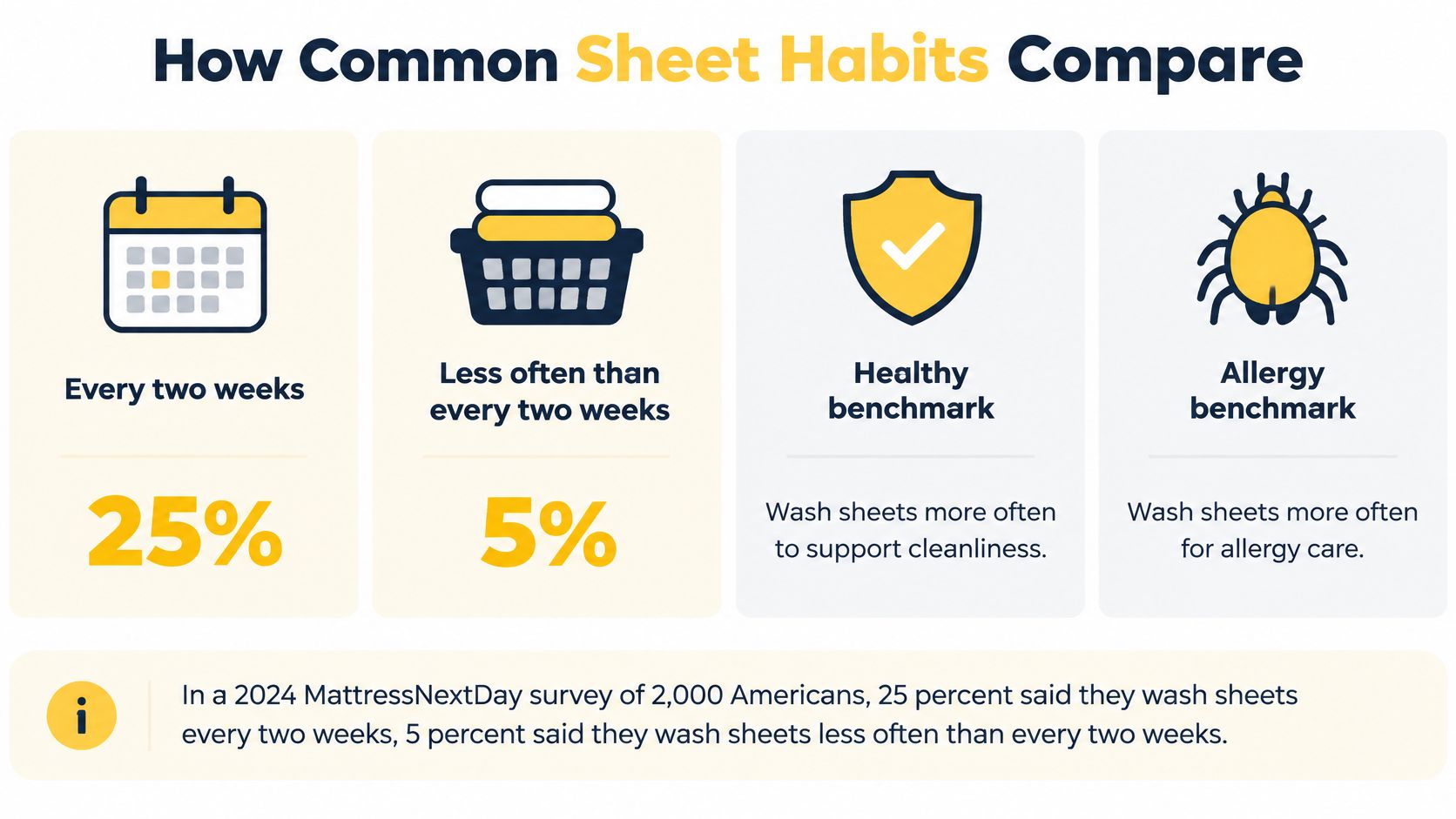
In the MattressNextDay survey of 2,000 Americans, 25% reported washing their sheets every two weeks, 5% did so every three weeks, and 10% only once a month. Bedrooms also slip down the priority list generally: in 2024, 23% of respondents in a 5,000-person OnePoll survey commissioned by Maid Brigade identified bedrooms as among the least-cleaned rooms in their homes.
| Sheet washing interval | Respondents | How it compares with guidance |
|---|---|---|
| Every 2 weeks | 25% | Outer limit for a healthy, pet-free bed |
| Every 3 weeks | 5% | Longer than the standard range |
| Once a month | 10% | Too long for allergy guidance and most sleepers |
Reading Your Own Habit Against the Table
Every two weeks matches a low-risk bed. It's the outer limit the standard schedule allows for a generally healthy sleeper without pets, heavy sweating, or visible soil. If that's you, you're fine, and your effort is better spent keeping the weekly dust and vacuum pass honest.
Three weeks and once a month fall outside both benchmarks. A bed can look made and smell fine on day twenty while the fabric is carrying a full month of skin scales and mite buildup, because those loads climb whether or not you can see them. On an asthma bed, a monthly sheet wash leaves the highest-exposure task undone while the rest of the room looks tidy.
The useful question is which column describes your bed tonight, and whether your last wash date belongs in it.
Check the date of your last wash before you set the interval. People often remember their last sheet wash as more recent than it was, so memory alone is a weak clock here. If you can't pin down the date, treat today as day one, wash them, and set the interval from there. Then carry that corrected interval into repeating reminders so the schedule runs on the calendar instead of on feel.
Lock the Routine Into Repeating Reminders
Commit to one column, plus any signal adjustments that apply to your room, and then split the bedroom into separate named chores. One vague item called clean the bedroom fails because it hides six different intervals inside one checkbox. You check it off after vacuuming and never wash the blanket.
Name Each Job and Give It Its Own Interval
Set these up as separate recurring items:
- Make the bed and air the room: Daily, tied to getting up.
- Damp-dust surfaces: Weekly, on the same day as vacuuming.
- Vacuum the bedroom: Weekly, twice weekly only while a signal demands it.
- Wash sheets and pillowcases: Weekly, or every two weeks for a low-risk bed.
- Wash the blanket or comforter: About monthly, unless it's on an allergy bed.
- Vacuum the mattress: Every one to three months uncovered, a few times a year encased.
In Benny, recurring chores can repeat on any interval you choose, so a weekly vacuum and a monthly blanket wash sit on the same list without being retyped, and you're sent a reminder when each one is due. Benny offers preset chore lists for the kitchen, bathroom, bedroom and living room, so the bedroom set is ready to adjust rather than built from a blank screen. If you want the whole household running off the same rhythm, the Benny chore schedule shows what's due today and what's coming up.
Make the First Week Easy to Start
Put the weekly dust-and-vacuum pass on a weeknight at about 15 to 20 minutes, not on a Saturday that competes with everything else. Tie sheet washing to the day laundry already runs so you're adding a load, not a new event. Then do the first weekly pass today, even if the full list isn't built yet. A routine that starts this evening beats a perfect chart that starts next month.
Start ugly: One weekly pass done today, at the wrong hour, with the vacuum you already own, counts more than a flawless system planned for Monday.
Review the list after two to four weeks. If dust returns before the weekly pass, shorten only that task. If encasements and low humidity keep the mattress clean, leave that deep job infrequent and don't invent work. For couples and shared rooms, share the list so both of you see what's done and what's waiting, but let the person who sleeps in the room set the column. Their exposure decides the intervals, and that one rule prevents most arguments about how often should you clean your bedroom turning into arguments about standards.
Give each bedroom job its own clock in Benny, from a weekly sheet wash to a monthly blanket wash, and let a reminder land when each one is due instead of relying on memory. Start with the bedroom preset, adjust the intervals to your column, and do the first weekly pass today. Visit Benny to set up your bedroom routine before tonight.