Sunday night you write the list. Kitchen, bathroom, bins, laundry. Everyone nods. By Wednesday the recycling is stacked past the rim, the bathroom bin smells, and nobody can remember whose week it is. The list is still on the fridge. Nobody has looked at it since Monday.
The chores were never the problem. The format was. A printed grid works well for one person with a steady week. It collapses with three roommates on different shifts, or with one parent who is the only person who notices the bin is full.
This guide sorts 10 free chore list templates by the two things that decide whether one sticks: who shares the work, and how often it repeats. Two adults splitting a flat need a different structure from a family with young kids. A fixed weekly list needs a different structure from rotating duties. Each entry covers what the format does well, where it stops working, and the household it fits. All are free. None is perfect.
Pick the setup you have, not the one you wish you had. Then read the entry that matches it.
Table of Contents
- 1. Benny
- 2. Canva
- 3. Vertex42
- 4. Ready Set Printables
- 5. doMahan
- 6. Alpacto
- 7. Upkeep Papers
- 8. ChoreChartLab
- 9. U.S. CDC My Chore Chart
- 10. FastUtils
- Free Chore List Templates Compared by Format, Best Use, and Limits
- Choosing the Right Chore List for Your Household
1. Benny
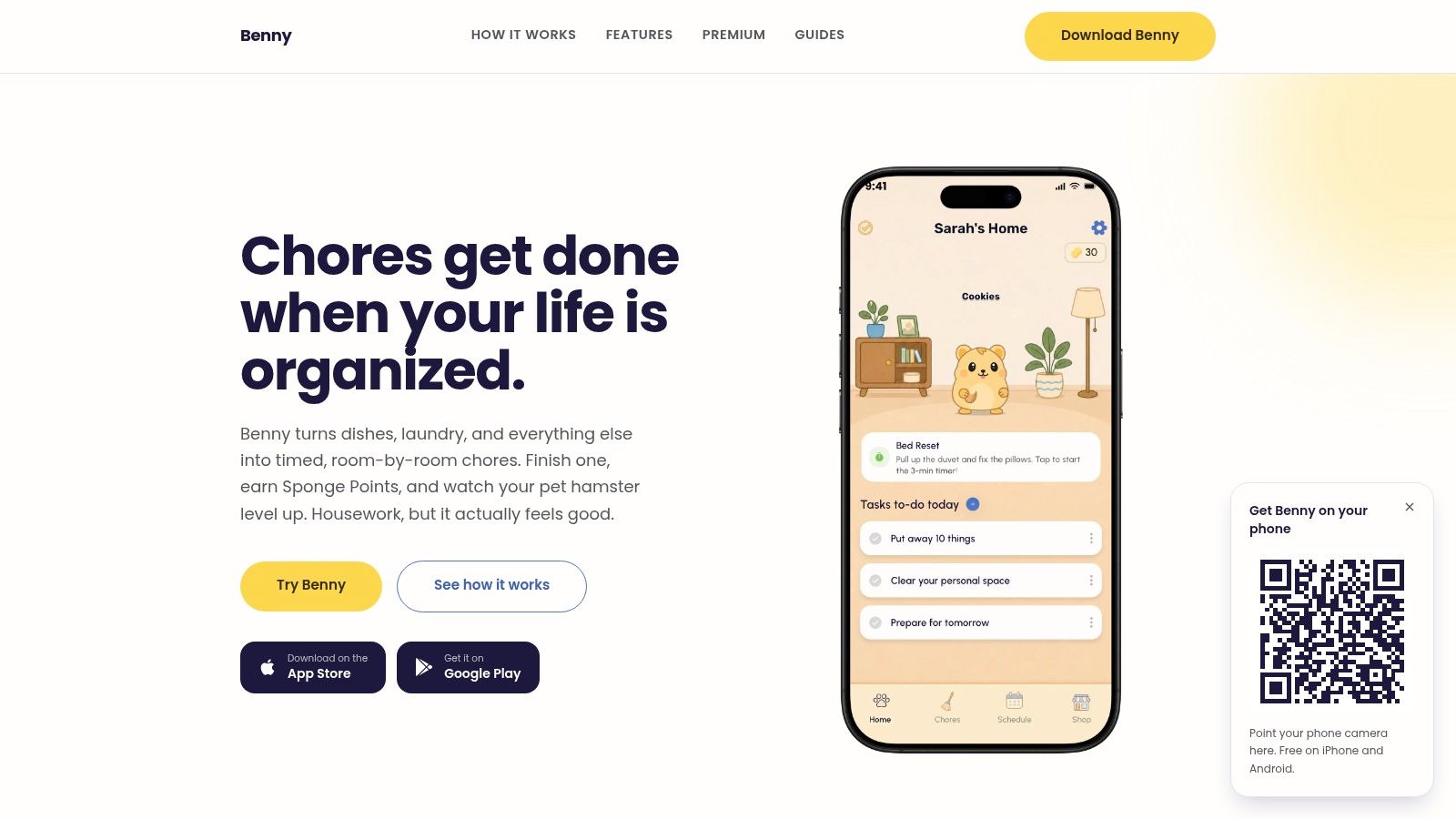
Benny replaces the list with a loop. You pick a room (kitchen, bathroom, bedroom or living room), take a preset chore or write your own, set a timer, and choose whether it runs once or repeats. Recurring chores come back on the schedule at whatever interval you set, and the schedule itself shows what is due today and what is coming up next.
The structure solves one specific failure: the job you keep meaning to start and never do. Every chore can carry a timer, so "clean the bathroom" becomes a 15-minute shift with a beginning and an end instead of an open-ended cloud over your evening. Finish before the timer runs out and the chore earns Sponge Points, which level a virtual hamster you can dress up.
Why the reward loop is not just decoration
Points tied to a finished timer are the version of gamification with evidence behind it. A lab experiment with 81 participants found audio-based points and levels improved both motivation and task-processing time for household activities. The limit is that a reward only works on the person holding the phone, so the points matter less than the shared structure underneath them.
In a shared home, everyone sees the same list, who each chore is assigned to, what is done and what is still waiting. You build the list room by room, hand each job to a specific person, and Benny reminds them when it is due. Scheduling, reminders, timers and shared assignments are all in the free app, and sharing a home costs nothing. Premium adds home-screen widgets, room and chore filters, holiday and sick modes, smart chores generated from a daily mood check-in, multiple-home management, streak protection when you snooze or skip, and removal of advertising.
Skip it if you want paper on a fridge and nothing else. The pet rewards are either fun or noise, and for plenty of adults they are noise. Test it on the room you procrastinate over most before you move the whole household across.
2. Canva
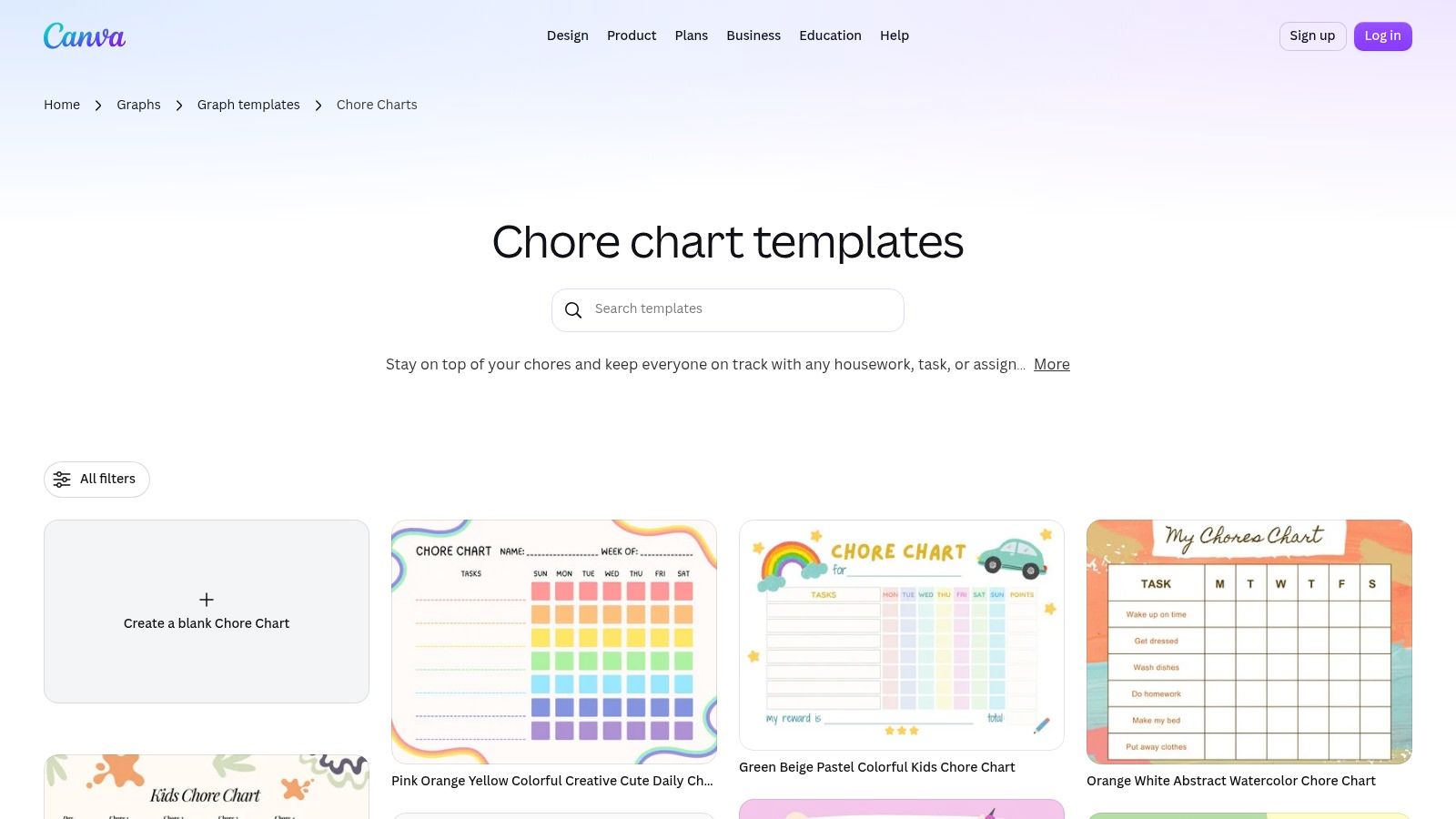
Canva is the pick when the chart itself has to persuade a child. You get a library of chore chart layouts, an online editor, and a finished design you can print or keep on a phone. For a six-year-old who wants their name in color and a picture of a broom, nothing else here gets you there as fast.
Judge it as a poster rather than a system. A printed Canva chart cannot remind anyone at 6 pm, rotate "bathroom" to the next person when the month changes, or show the household what is already done. Research consistently finds housework and the planning around it fall unevenly on one partner, so a pretty grid still fails if the same person notices the dirt, buys the cleaner and decides what "done" means.
What to put on it instead: assign the whole job, not the task. "Bathroom" belongs to one person for the month, restocking and deep clean included.
The paid plan sits behind some design elements, and a heavily decorated chart takes longer to build than a plain checklist takes to write. That trade-off matters when the chart is due tonight.
Best fit: families making a visual chart for younger children, or anyone who needs a poster rather than a system.
3. Vertex42
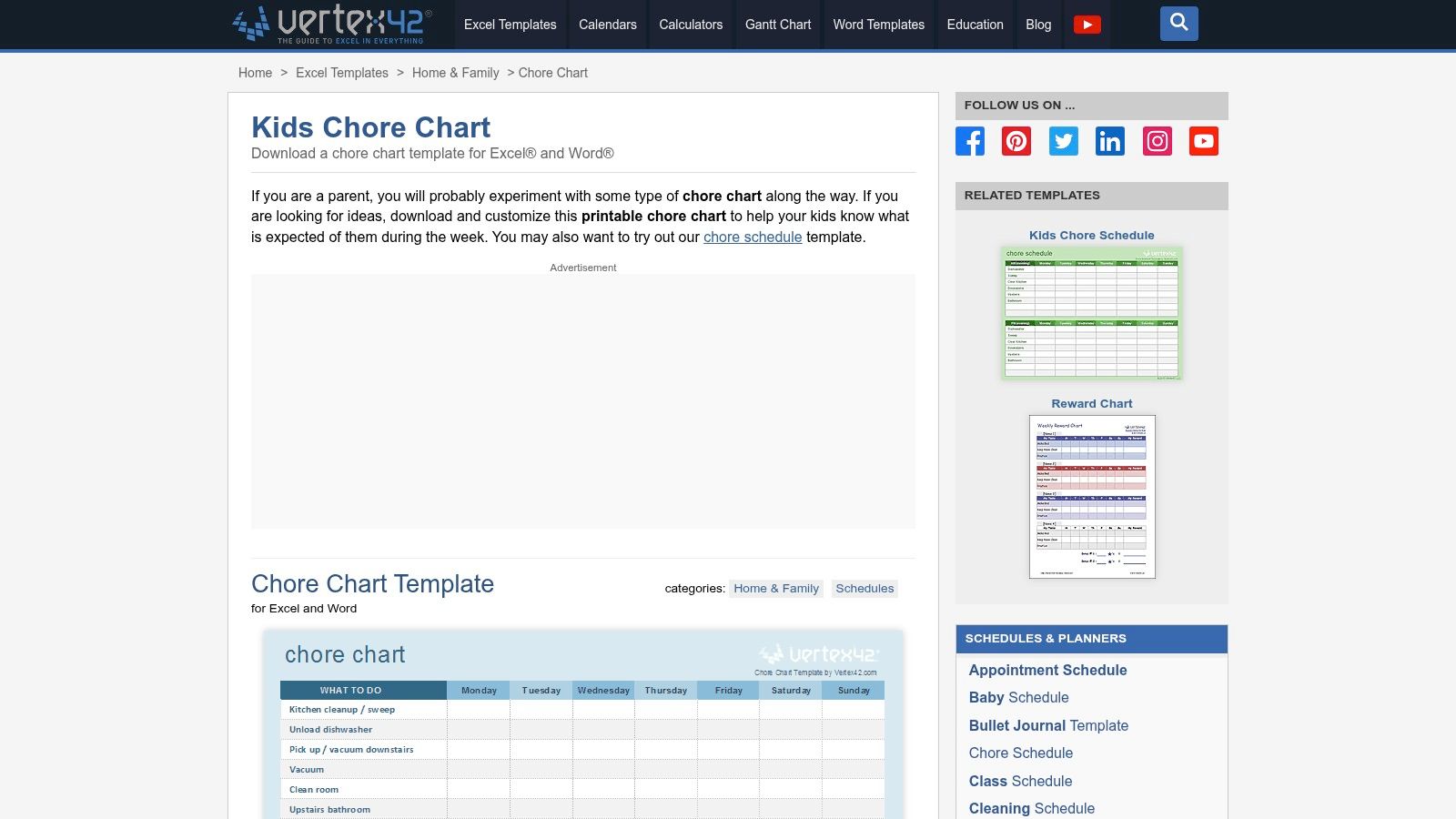
Vertex42 gives you the same grid in Excel, Word or Google Sheets. Chores down the side, days across the top, a name field for one child or several. The download is free for private use.
The daily rows earn their place. The Bureau of Labor Statistics' 2024 American Time Use Survey found 80.9% of people aged 15 and older did at least one household activity on an average day, and 65.2% spent time on food preparation or cleanup. Those jobs come back every day, which is why seven columns beat a single to-do list.
Pick the Google Sheets version if more than one person will touch it. A shared sheet updates for everyone, keeps a history, and lets you see in three weeks whether one person is carrying the kitchen. Rotating duties work too: swap the names in the cells and the rotation resets. Editing a row is faster than rewriting a printed page.
The limits are real. The labels assume children ("My Chores"), so adults retitle them. The licence covers private use only. A spreadsheet also sends nothing: no reminder, no nudge, no alert when Tuesday's job sits undone. Someone still has to open the file and check.
If remembering is the weak point rather than the list itself, a recurring chore schedule brings each job back by itself and reminds you when it is due.
Best fit: a parent assigning jobs to two or three kids who already use a computer for homework, or roommates who want a shared record without installing an app.
4. Ready Set Printables
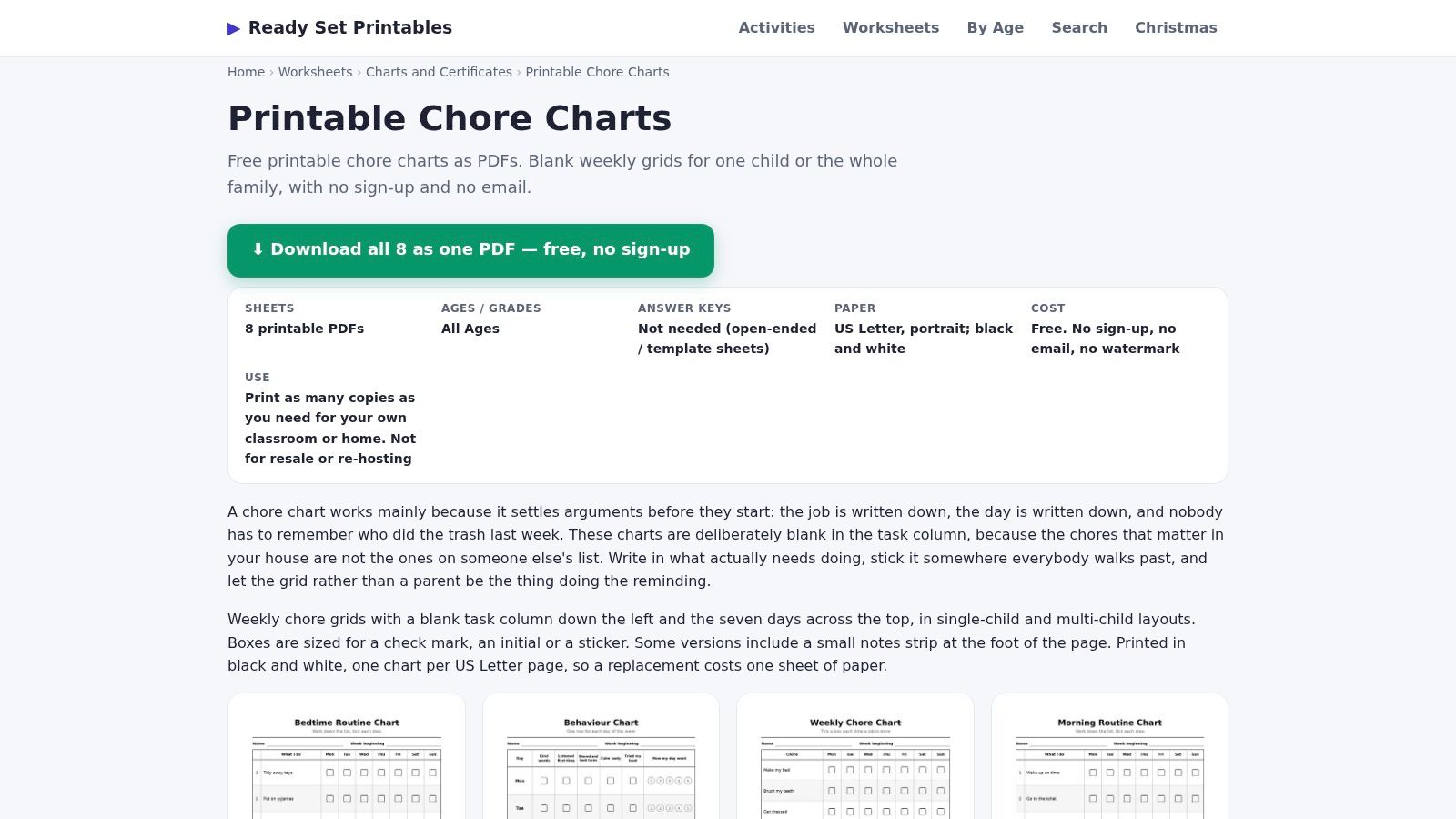
Eight black-and-white PDFs, single-child and multi-child weekly layouts, and blank rows you fill in by hand. No sign-up, no email, no colour ink.
The blank rows are the point. Say you have a six-year-old and a nine-year-old. One page each, a pen, and a five-minute conversation about who feeds the cat and who wipes the table. Nothing to configure, nothing to charge, nothing to explain.
- Fastest possible start: download, print, write, done in under ten minutes.
- Cheap to replace: a lost or scribbled-on chart costs you one sheet of paper.
- Printer-friendly: black and white only, so it won't drain a colour cartridge.
What it cannot do is change. A static weekly PDF has no reminders, no history and no way to reassign a job mid-week without crossing something out. Print it for a household where the routine barely moves.
Best fit: families with young children who want a page on the wall this afternoon.
5. doMahan
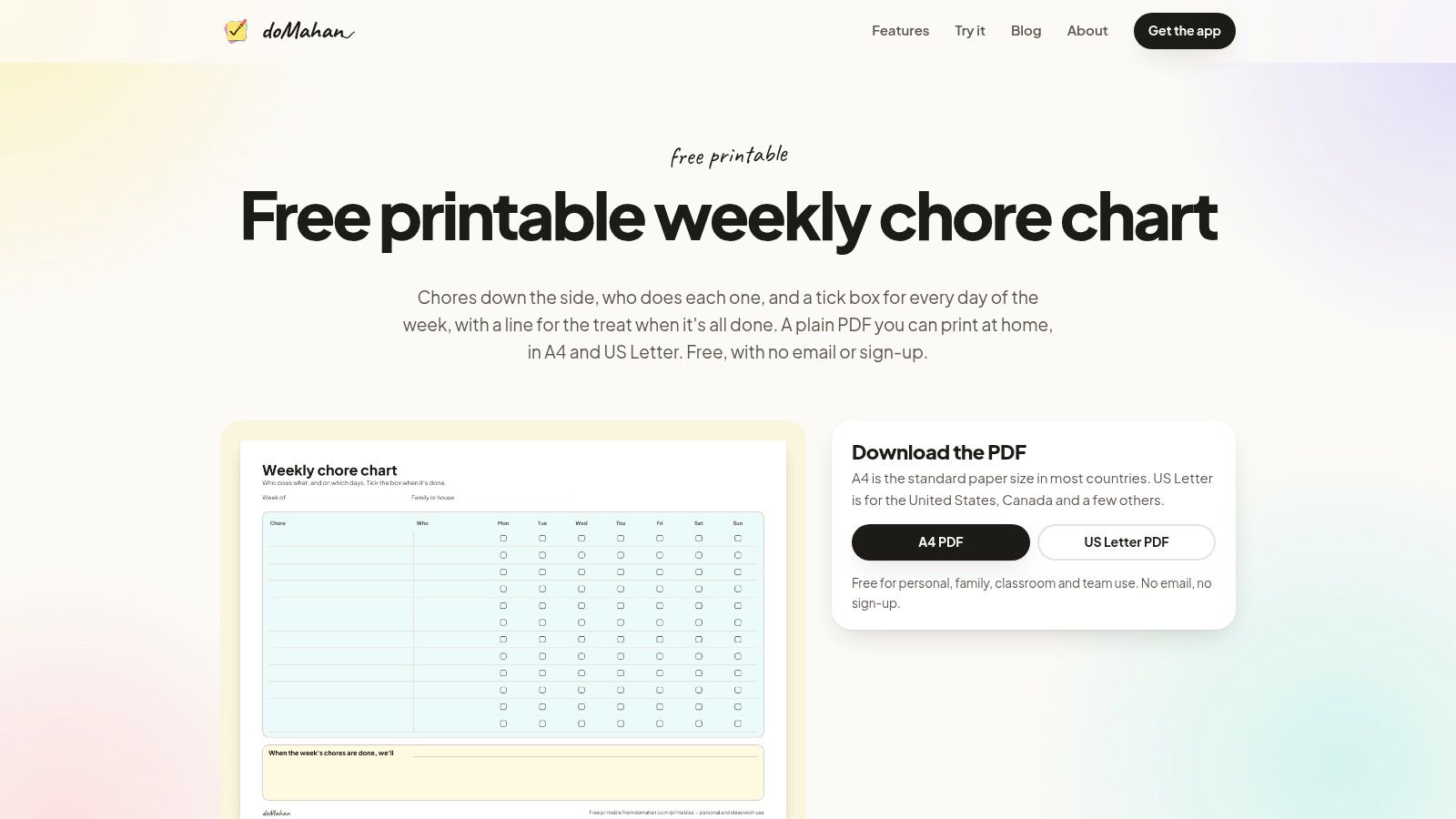
Undated weekly page, A4 and US Letter, columns for the chore and the person, a checkbox for each day, and a line at the bottom for a reward or treat. No account, no email.
The undated format is useful. Print the same page every Sunday, stick it on the fridge, and you've rebuilt the week without touching a design tool. Light colours are chosen to stay readable in black and white and to use less ink, which matters if you're printing fifty-two of them a year.
The reward line is where I'd push back.
Print the page. Leave the treat field blank until the chores are running for a month. Rewards work better as an occasional surprise than as a standing wage for emptying the dishwasher.
Two limits. The PDF layout is fixed, so you can't rename columns or add a second person to one task, and the weekly frame doesn't hold monthly jobs like cleaning the oven or descaling the kettle. Those need a separate list.
Best fit: one household, one stable weekly rhythm, a pen on a string.
6. Alpacto
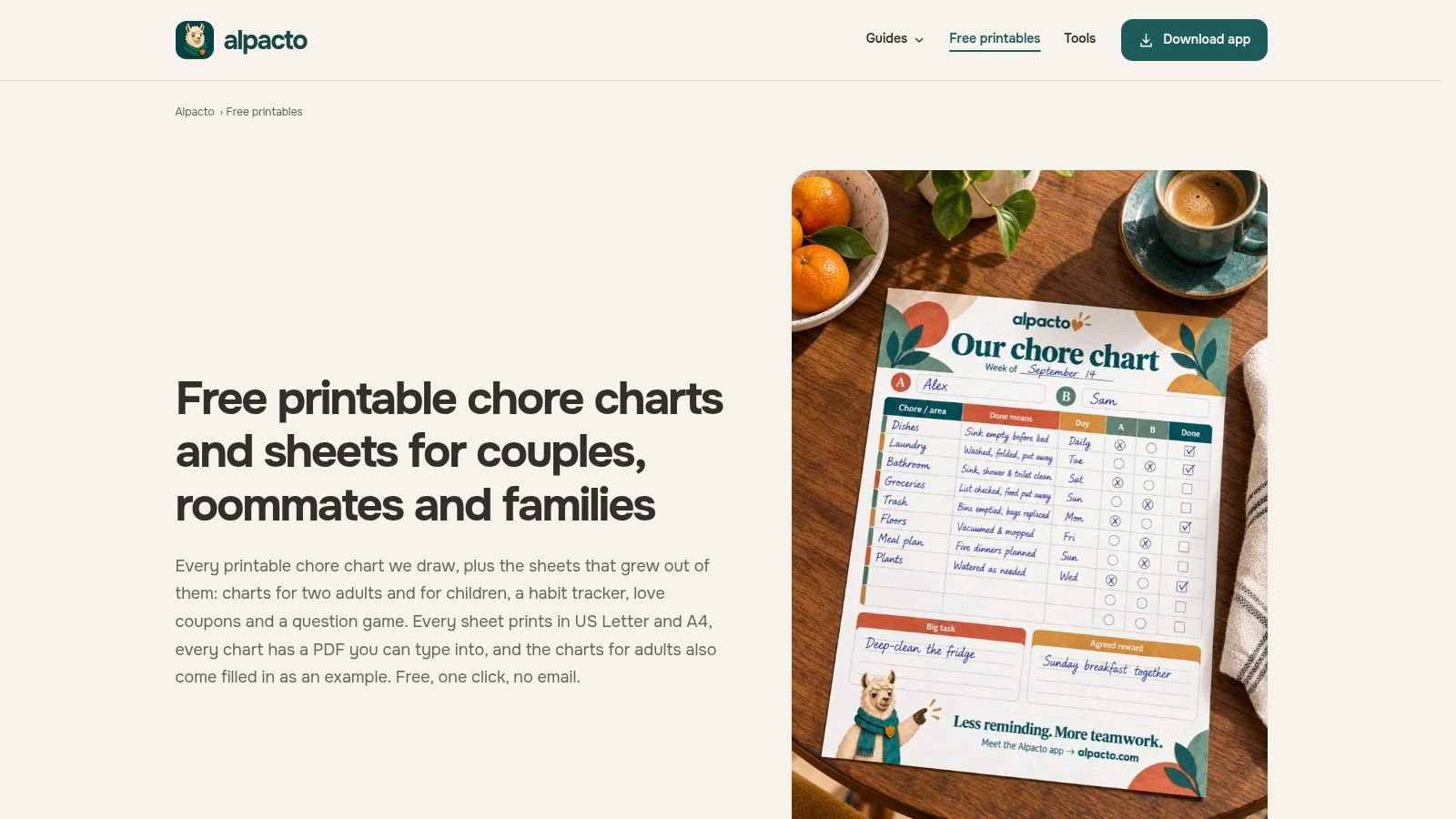
Four flatmates, one bathroom, and a cleaning duty that somehow lands on the same person every month. Alpacto is built for exactly that setup. Its roommate chart runs a weekly rotation for two to four people, and a separate household list is sorted by frequency, so jobs that recur at different intervals live in one place instead of relying on memory.
The fairness case for a rotation holds up. Unpaid housework still falls more heavily on women than men in most countries, and shared flats are no exception to that pattern. Paper alone won't rebalance it. What the chart does is make the split visible, and a visible split is much harder to argue with than a vague feeling that someone always ends up scrubbing.
Most charts are fillable PDFs, so you can type names and tasks in before printing. Letter and A4 versions are both included.
What it can't do: the page never changes once it leaves the printer. No reminders, no alert when it's your turn on the kitchen, and some sheets in the set aren't fillable, which means handwriting those. If your household swaps duties week to week, the printout goes stale quickly.
Best fit: two to four adults in a shared flat who want a rotation decided in advance rather than renegotiated every Sunday.
7. Upkeep Papers
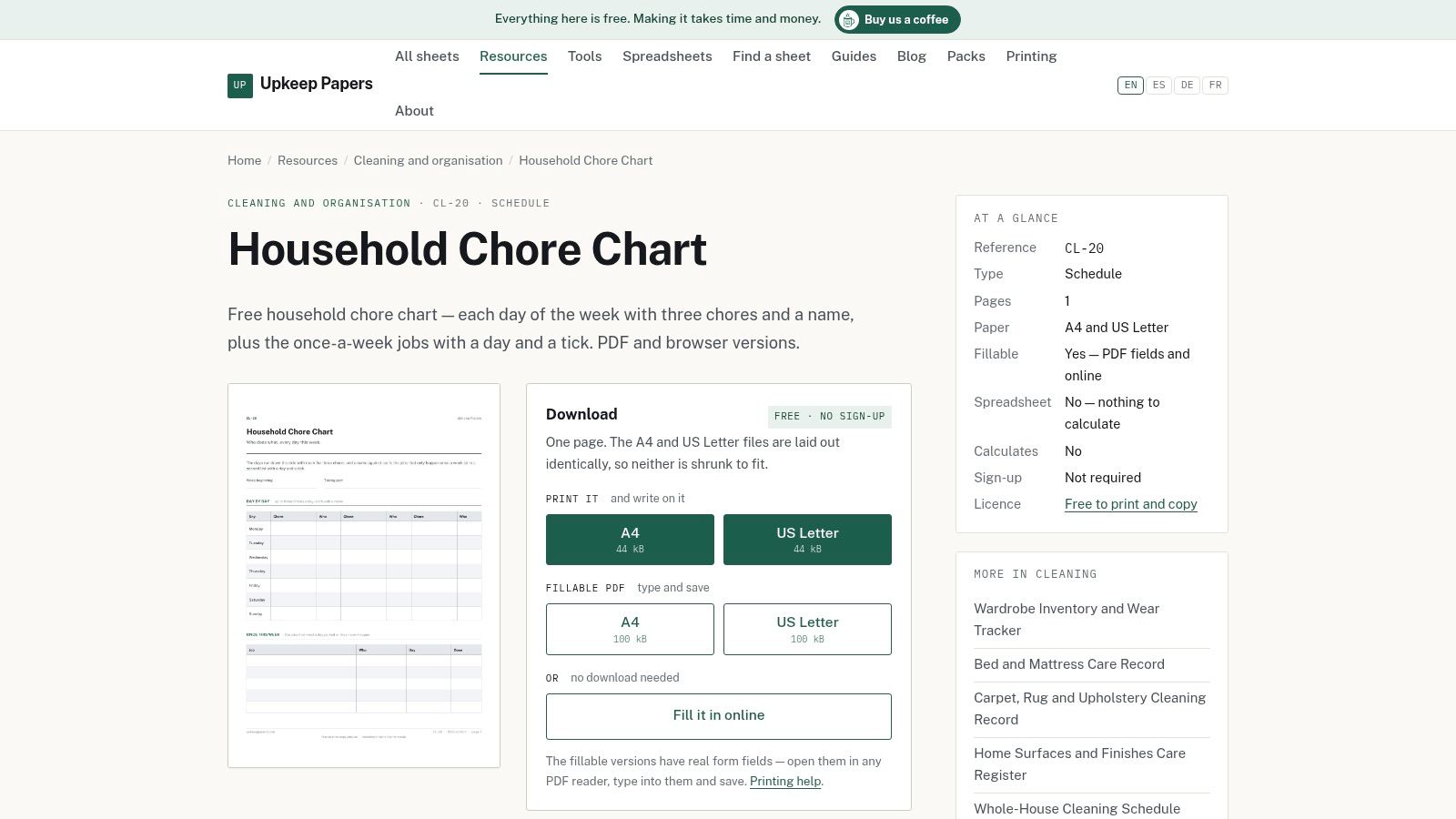
One chart, three formats: a printable PDF in A4 or US Letter, a fillable PDF you can type into and save, and a browser version where you add or remove rows and tick jobs off, no account needed.
The chart splits daily assignments from once-a-week jobs, which is more structure than a blank grid gives you. That split matters because the heavier half of housework is usually the planning, not the scrubbing. Time-use surveys across countries keep finding the same pattern: women carry more unpaid domestic and care work than men, and much of that load never appears on a task list at all.
A chart that records only task names hides that labour. Add four fields and it stops hiding: who owns it, how often it recurs, how long it takes, and whether it's done. If the people sharing your home aren't family, this guide to splitting chores with roommates walks through that first conversation.
Two honest limits. Browser entries are stored on one device and one browser, so a flatmate on their laptop sees nothing. And it isn't a recurring-task manager: a monthly job won't resurface on its own, so you re-enter it or you forget it.
Best fit: one person who wants a tidy record and doesn't need the household logged in.
8. ChoreChartLab
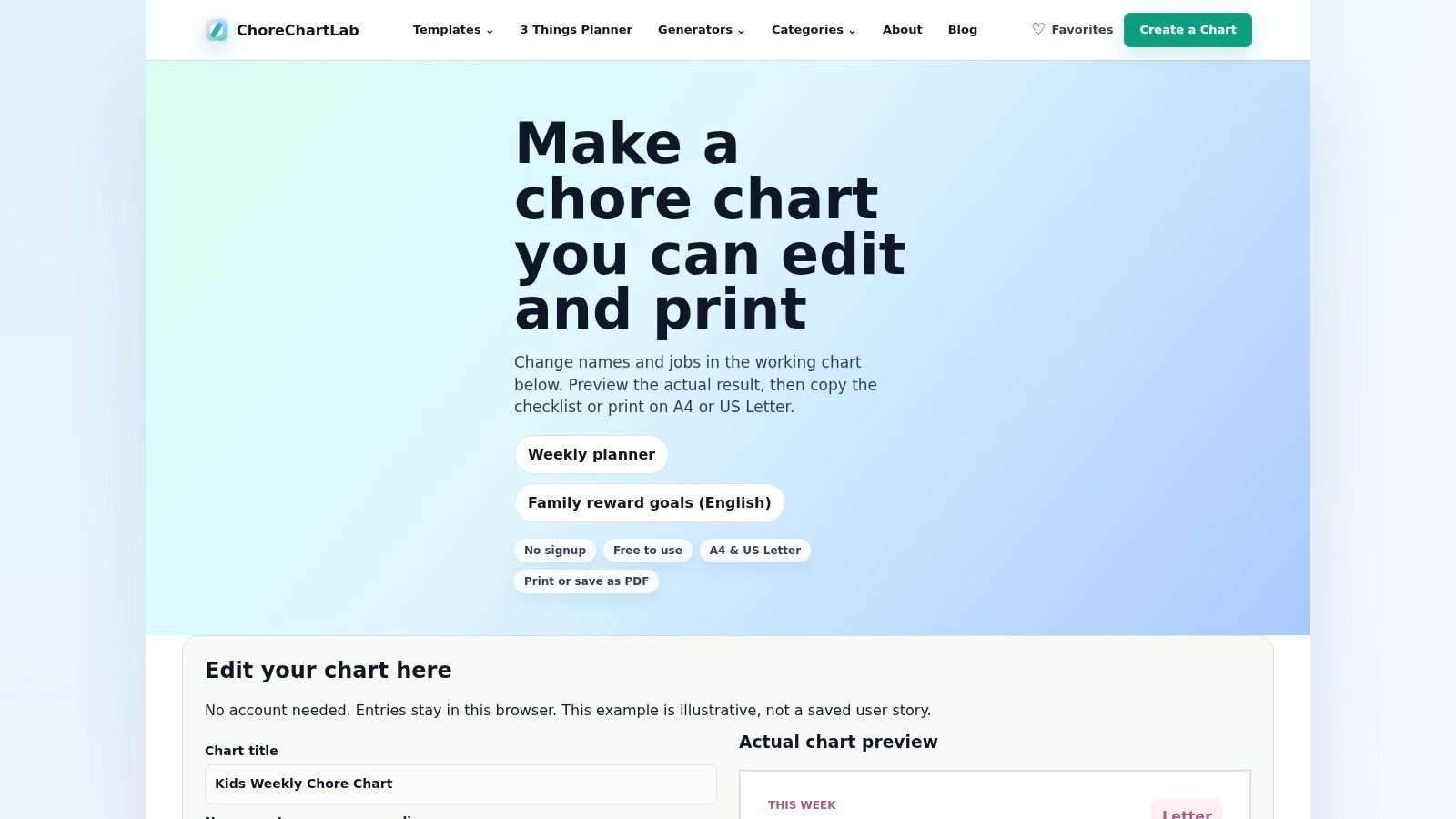
A browser generator with a live preview. Edit the title, the names, the chores, watch the chart change, then print it or save it as a PDF. A4 and US Letter, weekly chore templates, cleaning schedules and roommate layouts, all without a sign-up.
The live preview is the useful bit. You can see that "clean the fridge" doesn't fit in the box before you waste a sheet, and you can fit three people across the top without guessing at column widths.
Customisation stops at the template. You're picking from layouts someone else designed, so a household with an unusual split (one person on nights, one on school runs) may not find a shape that matches. It also produces a printout, not a shared list. Once it's on the fridge, it's frozen.
If the problem is that nobody knows who's doing what, a shared chore list everyone can see solves a different problem than a printout does.
Best fit: someone who wants a personalised chart in ten minutes without opening a spreadsheet.
9. U.S. CDC My Chore Chart
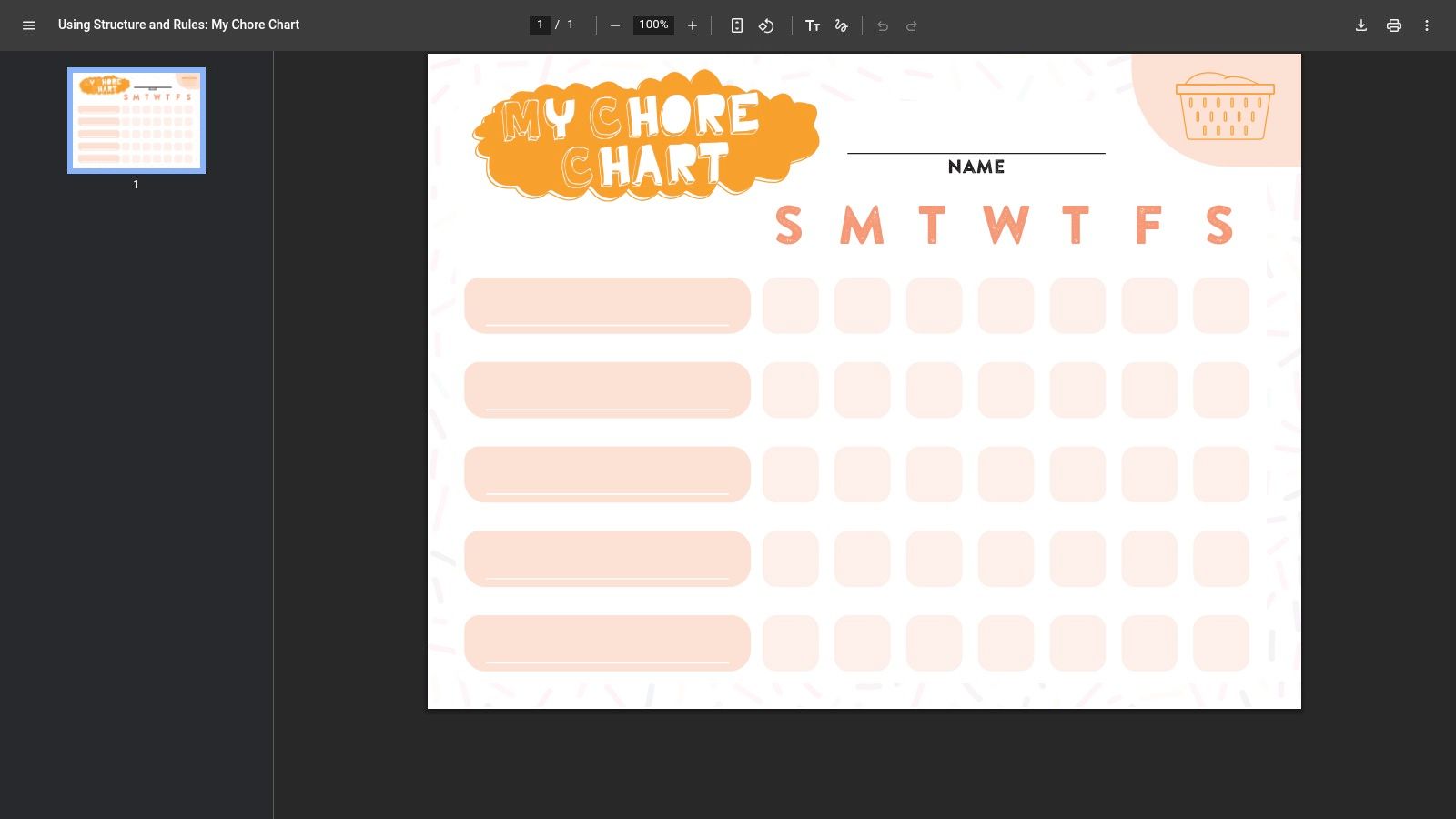
One page. A name line, five blank chore rows, and a checkbox for every day of the week. That's the entire tool, and the restraint is the feature.
Five rows is close to the smallest realistic plan, and there are weeks when that's exactly what you need. Publicly available ADHD guidance leans on externalising task initiation, working memory and time estimation through small visible zones, visual timers, body doubling and time-bucketed lists, while noting that much of this comes from clinical practice and lived experience rather than strong controlled trials (ADHD cleaning guidance). A five-line page fits that logic. It doesn't ask you to plan a month. It asks for five things today.
Two limitations are hard. There's space for only five chores, so laundry, dishes, bins, bathroom and floors fill it instantly and the monthly jobs have nowhere to go. And it doesn't handle multiple people, rotations or reminders. One page, one person.
Best fit: a low-capacity week, a single person, or a child learning to finish what they start.
10. FastUtils
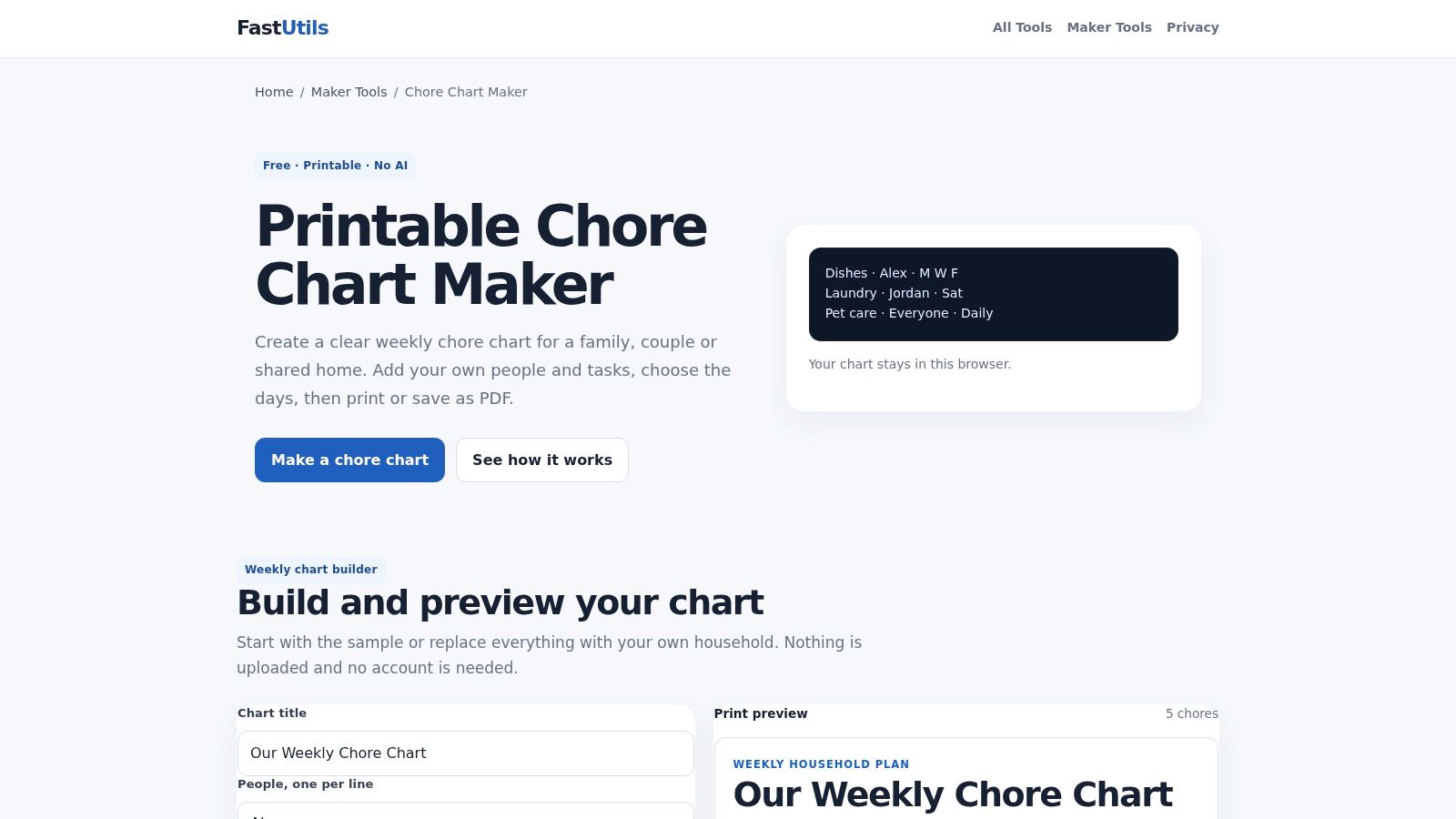
A chart maker where you enter household members, add your own chores, and set which days each task should happen. Preview, then print or save as a PDF. The site says the chart stays in your browser and the tool is free without sign-up.
The day-by-day assignment is the strongest part. "Bins on Tuesday, bathroom on Thursday, sheets on Saturday" is a real schedule rather than a vague list, and it prints onto one page for the fridge or a shared hallway.
In 2025, 74% of U.S. consumers said they valued clean living, according to Numerator's survey of 5,291 consumers. Caring about a clean home is rarely the problem. The harder problem for many households is a format that survives a busy week, and a printed chart only works if someone looks at it.
FastUtils sends no reminders and never resurfaces a task on its own. You choose every chore and frequency yourself, so a forgotten job stays forgotten. It's a maker, not a manager.
Best fit: a household that already knows what needs doing and just wants it written down clearly. Couples and roommates with a steady weekly split get the most from it; anyone who needs a nudge won't get one.
Free Chore List Templates Compared by Format, Best Use, and Limits
| Item | Format | Best For | Editable | Reminders or Recurring Tasks |
|---|---|---|---|---|
| Benny (Recommended) | iPhone and Android app | Shared, room-based household chores | Yes; create and customize tasks | Yes; scheduled repeats and reminders |
| Canva | Online editor and printable or digital charts | Visual, personalized chore charts | Yes; customize templates online | No automatic reminders or recurring tasks |
| Vertex42 | Excel, Word, Google Sheets, and printable charts | Editable weekly charts for children or households | Yes; edit downloaded files | Manual weekly tracking; no automatic reminders |
| Ready Set Printables | Printable PDF sheets | Free, handwritten weekly tracking for one child or a family | No; static PDFs | Weekly check-offs; no automatic reminders or recurring schedules |
| doMahan | Printable A4 and US Letter PDFs | Reusable weekly chore assignments and rewards | No; fixed PDF layout | Weekly check-offs; no automatic reminders |
| Alpacto | Printable charts, including some fillable PDFs | Couples, roommates, and household chore rotations | Some charts are fillable | Rotation and frequency charts; no app reminders |
| Upkeep Papers | Printable PDF, fillable PDF, and browser-based chart | Structured daily and weekly chore tracking | Yes; fillable fields and browser editing | Daily and weekly layout; no automated recurring tasks |
| ChoreChartLab | Browser-based generator; printable or PDF output | Custom weekly, cleaning, or roommate charts | Yes; edit and preview in browser | Printable schedules only; no automatic reminders |
| U.S. CDC, My Chore Chart | Printable PDF | Simple handwritten weekly tracking | No; fixed PDF | Daily checkboxes; no reminders or automatic recurrence |
| FastUtils | Browser-based chart maker; printable or PDF output | Custom household chores assigned to specific days | Yes; set members, chores, and days | Choose task days manually; no reminders or automatic notifications |
Choosing the Right Chore List for Your Household
Start with the setup, not the design. A pretty chart that doesn't match how your household runs will be ignored by Friday.
Couples and roommates need rotation and shared visibility. If one person carries the remembering, the fix isn't a nicer list, it's assigning whole responsibilities by name and rotating the unpleasant ones. Alpacto and Upkeep Papers get you there on paper. Neither will send a reminder, so the rotation depends on someone checking it.
Families with younger children do well with a visual weekly chart. Canva, Ready Set Printables and Vertex42 all work, and the choice comes down to how much customisation you want versus how fast you need it on the wall. Younger kids respond to pictures. Older kids and teens respond better to a short daily list with a deadline attached.
If the problem is forgotten recurring tasks, no printable on this list solves it. None of them send reminders, and every one of them depends on a person opening the page. That's not a flaw in the templates. It's the category.
Print one template for two weeks before you decide. Note which chores got missed and why. Missed because nobody remembered points to a reminder. Missed because the week was too heavy points to a smaller plan.
Run an equity audit once a month rather than counting checkmarks. Compare who owns the planning, who notices the supplies, who books the appointments. A list where both people tick eight boxes can still be lopsided if one of them is doing all the noticing.
Benny's core scheduling, reminders and timers are free, which makes it a reasonable option to test alongside a printable sheet for the chores that keep slipping. Keep the paper for the weekly reset and use the app for the jobs that need a nudge.
Whatever you choose, give it a fortnight. A format that survives two ordinary weeks, a sick day and a late shift is worth keeping.
If your list keeps dying by Wednesday, Benny may be the fix: it schedules one-off and recurring chores room by room, sends a reminder when each one is due, and shows everyone in your home what's assigned and what's finished. The schedule, reminders and timers are all free on iPhone and Android. Visit Benny and set up one room tonight, then see whether the paper chart survives the week.