The dishwasher is full, the dog still needs a walk, and the person who always does it is standing in the kitchen with a phone. You downloaded a chore app on Sunday, full of good intentions. By Wednesday nobody has opened it, and the argument is the same one you had before the download.
That is why the search for the best chore app for family so often ends in a folder of abandoned charts. The app failed one of four tests households fight about. Who is doing what. Whether a recurring job comes back on its own. Whether a child gets a reward they care about. Whether anyone can use it without a tutorial.
Most families don't quit because they picked a mysteriously bad product. They quit because recurrence sat behind a paywall, the reward was cash when the child wanted a pet, or the first screen needed a manual nobody had time to read.
This guide compares ten options on shared task management, scheduling, age-appropriate rewards, and day-to-day ease. The limit of each app sits next to the pitch, so you can match the tool to how your house already runs. Mixed phones, one shared tablet, roommates, or a parent who will quit if setup takes all evening.
If you want a room list, a timer, and a shared view tonight, start with the first entry. If you want allowance, a wall display, or photo proof, skip ahead. Pick two, run the same weekly jobs for seven days, and keep the one people open without you nagging.
Table of Contents
- 1. Benny
- 2. Sweepy
- 3. Tody
- 4. Nipto
- 5. Cozi
- 6. Flatastic
- 7. Homey
- 8. DAKboard Family Chores
- 9. ChoreSplit
- 10. Famiyo
- Family Chore Apps Compared by Cost, Sharing, Rewards, and Best Fit
- Choosing the App Your Family Will Still Use in Month Three
1. Benny
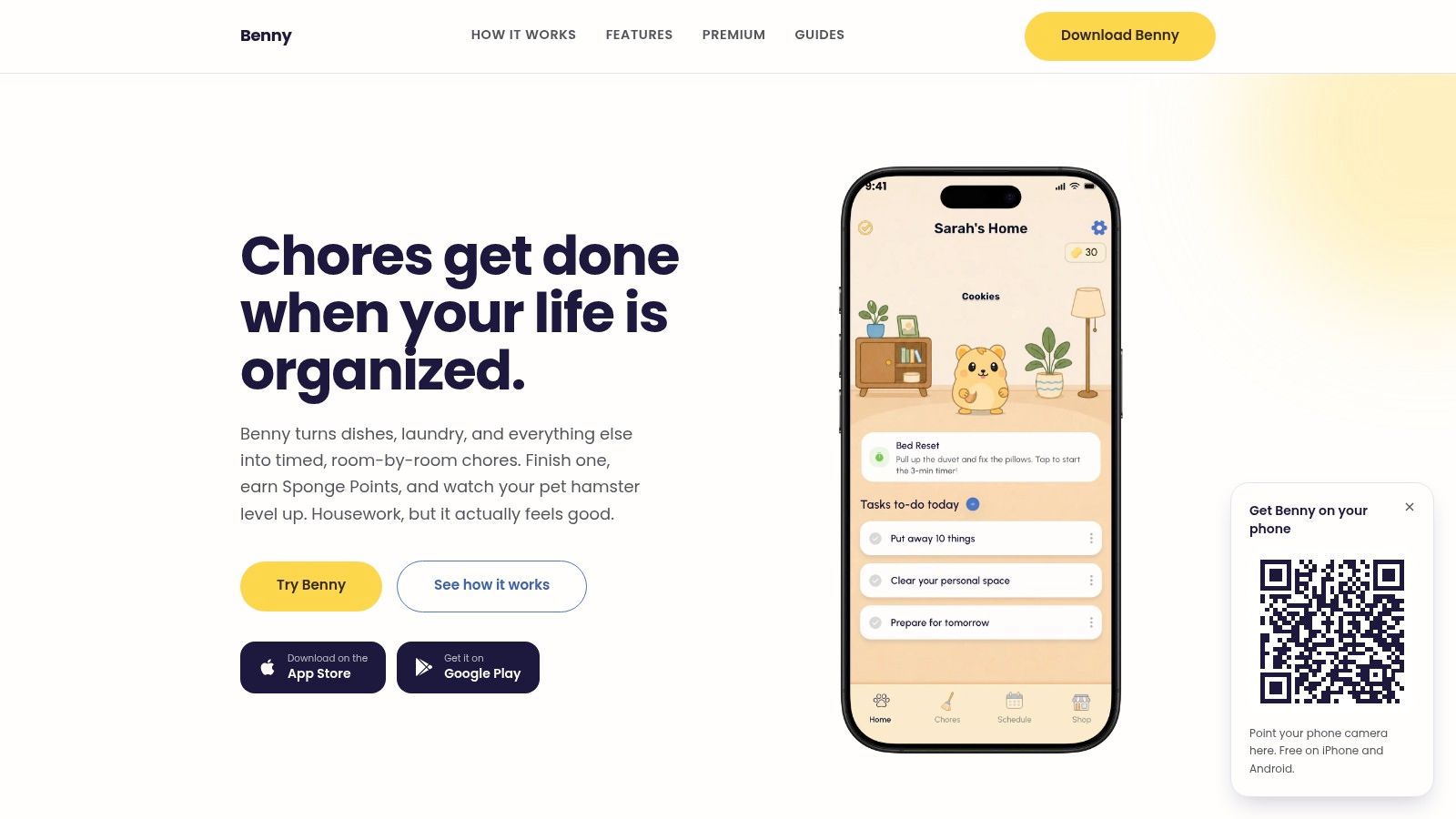
A shared list only works if the same jobs reappear without someone rebuilding Sunday's chart. Benny is a chore and task management app with a light game on top. You pick a room, add a chore from a preset or from scratch, and set a timer. Presets cover the kitchen, bathroom, bedroom, and living room. A bathroom clean can be 15 minutes. You start the timer, work until it runs out, and tap finished.
Each chore is one-off or recurring on any interval you choose, and a recurring chore comes back by itself. We send a reminder when it's due. The schedule shows what's due today and what's coming up.
In a shared home, roommates, partners, and family see the same list, including who each chore is assigned to and what's still waiting. You add chores room by room and assign each one to a person. Sharing a home is free, and it works across iPhone and Android, so mixed phones aren't a blocker. Content in that home, including chore names and completion, is visible to the other members.
Rewards, ads, and the Premium line
Finish before the timer runs out and the chore earns Sponge Points. Points level a virtual hamster and buy accessories. I like that for younger kids who want a pet, not a lecture. It won't motivate a teen who wants cash, and it won't run if the rest of the house refuses the app.
The chore schedule, reminders, timers, and shared assignments stay on the free app, which includes ads. Premium adds home-screen widgets, chore and room filters, smart chores from a daily mood check-in, holiday and sick modes, multiple-home management, custom effort points, and snooze or skip that keeps a streak. There isn't a single public price to quote here. Deleting the app doesn't cancel a subscription. Price changes don't apply to the current billing period, and you get advance notice under the app store's rules.
Practical rule: If one adult is still the only person who remembers the plan, the hamster isn't the product. The shared schedule is.
A British Psychological Society summary of research with 3,000 U.S. parents found mothers handled 71% of household cognitive-labor tasks versus 45% for fathers. A visible owner and a next due date are how you stop that planning from living in one person's head. Stay free if the list is enough. Move to Premium when illness, a second home, or uneven job size is the main challenge.
2. Sweepy
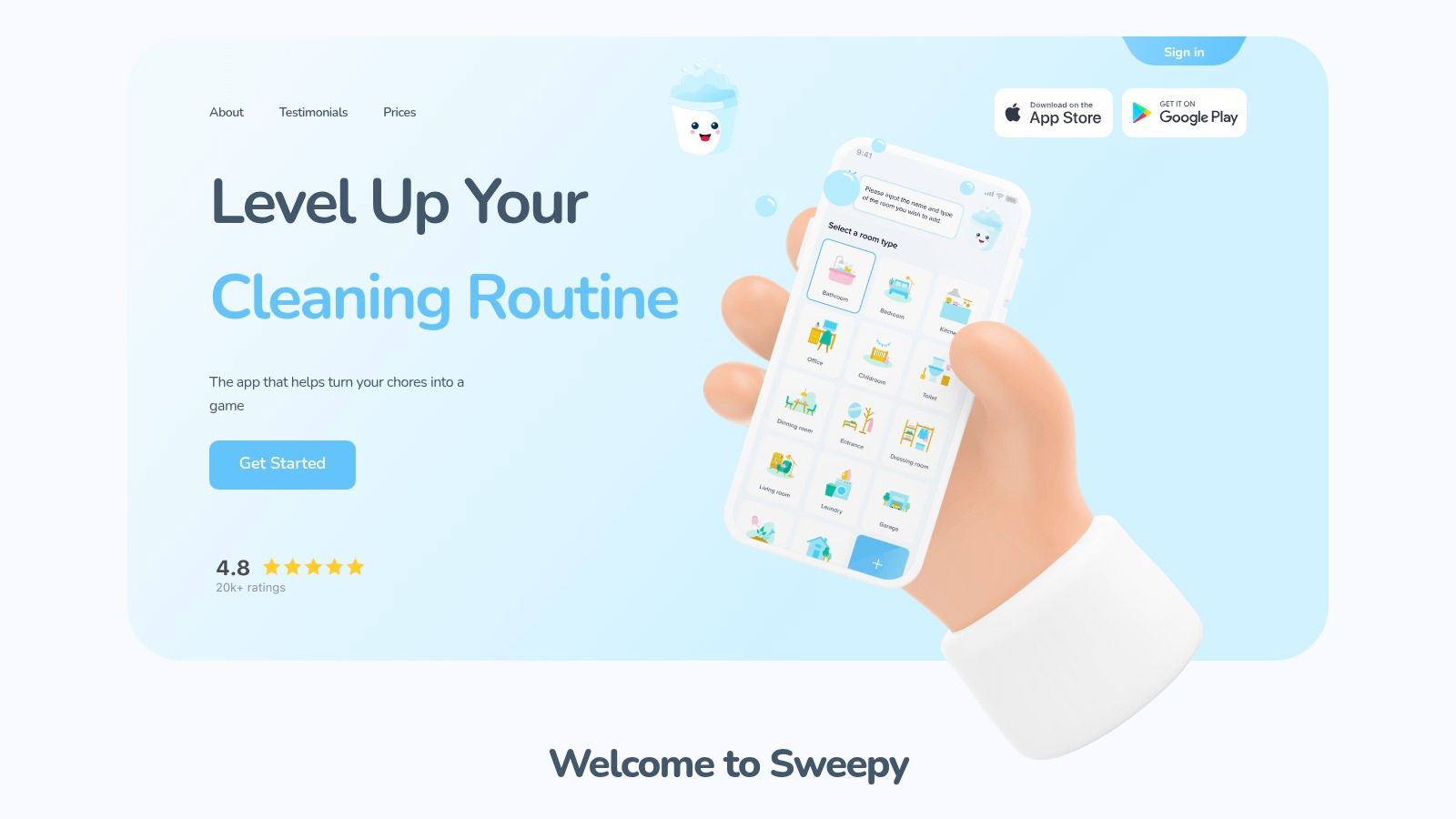
Sweepy is a cleaning app, not an allowance app. You organize the house room by room, with suggested tasks or your own, and a cleanliness cue shows which room is sliding. That picture is the tutorial. You don't need a manual to see the bathroom needs attention.
France's National Institute for Demographic Studies reported in 2024 that nearly 9 in 10 ten-year-olds said they set or cleared the table, tidied a bedroom, or did another listed domestic task at least occasionally. Those jobs repeat, and they live in different rooms. A room plan matches that better than one flat list.
- Custom chores on the free plan: You can add your own tasks without paying.
- Sharing and a leaderboard: Household members can see the work, with difficulty points and parent approval for children's tasks.
- The Premium line: Automatic daily checklist generation requires Premium.
Points help siblings who like a score. They annoy houses that want a quiet checklist and will turn chore time into a contest. Sweepy suits a family building a cleaning routine. It doesn't pay allowance, and it won't feel fair if one parent still does all the assigning while the leaderboard cheers the kids.
3. Tody
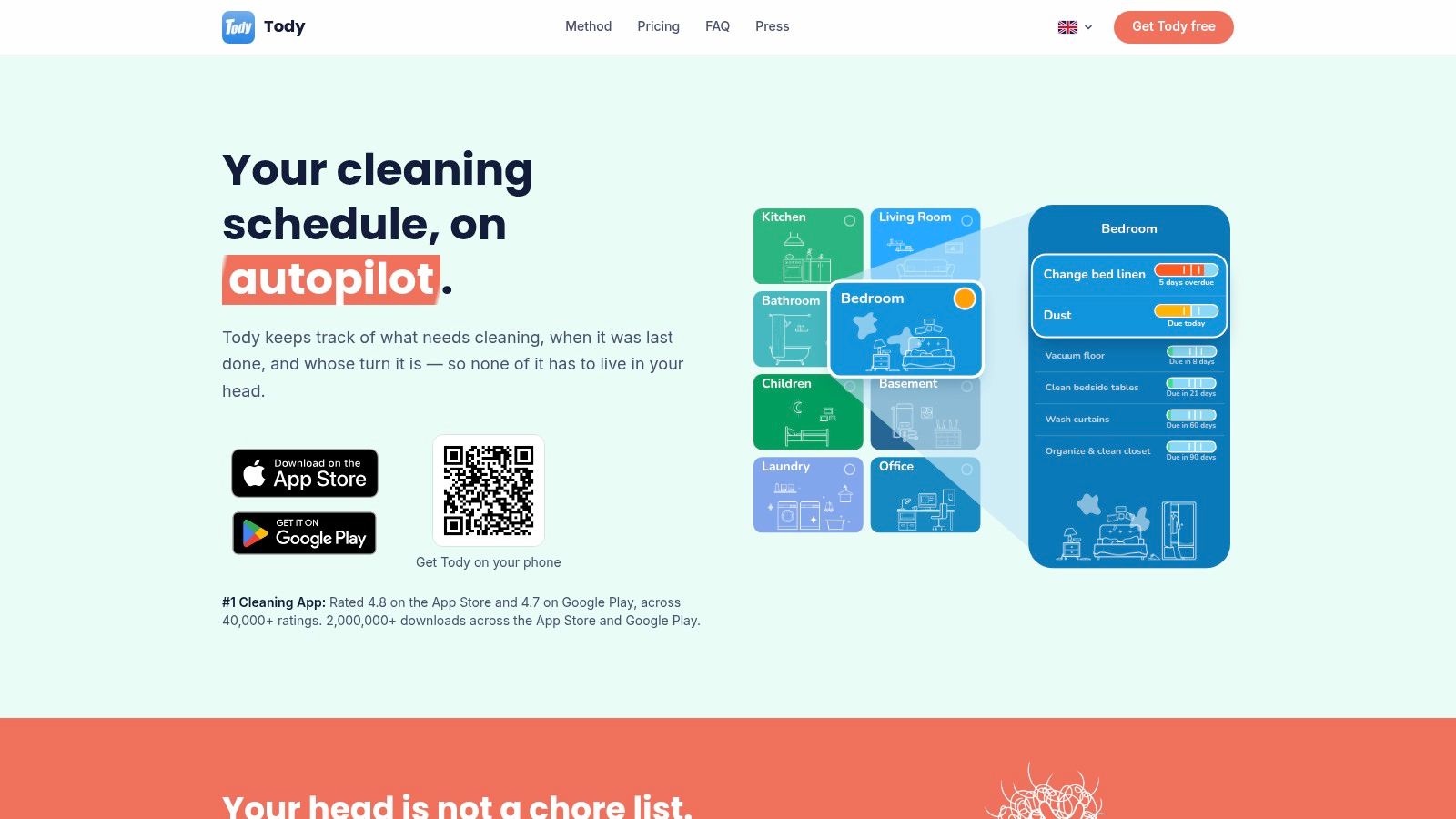
Some jobs aren't every Monday. The bath mat doesn't care what day it is. Tody sets each cleaning task on its own interval, then shows how due it is. You can assign chores and rotate them. The solo version is free and ad-free, according to Tody.
Sharing is the paywall. Household members need Premium+ to share and update the same live plan. That plan also adds FairShare contribution targets, the closest thing here to a fairness meter. Annual prices exist for the paid tiers, so check them in the store before you assume the solo app will cover a family.
Women and girls perform, on average, 2.5 times as much unpaid domestic and care work as men, in the latest UN gender snapshot. Counting finished tasks won't catch that if one person still plans everything. FairShare tries. It still won't run an allowance or a reward a child picked.
A flexible interval beats a fake weekday when the job is really "when it's dirty."
If you want recurrence you set yourself, room by room, compare that with a chore schedule with reminders. Tody fits adults sharing a cleaning load. It doesn't fit families whose children need a prize they care about.
4. Nipto
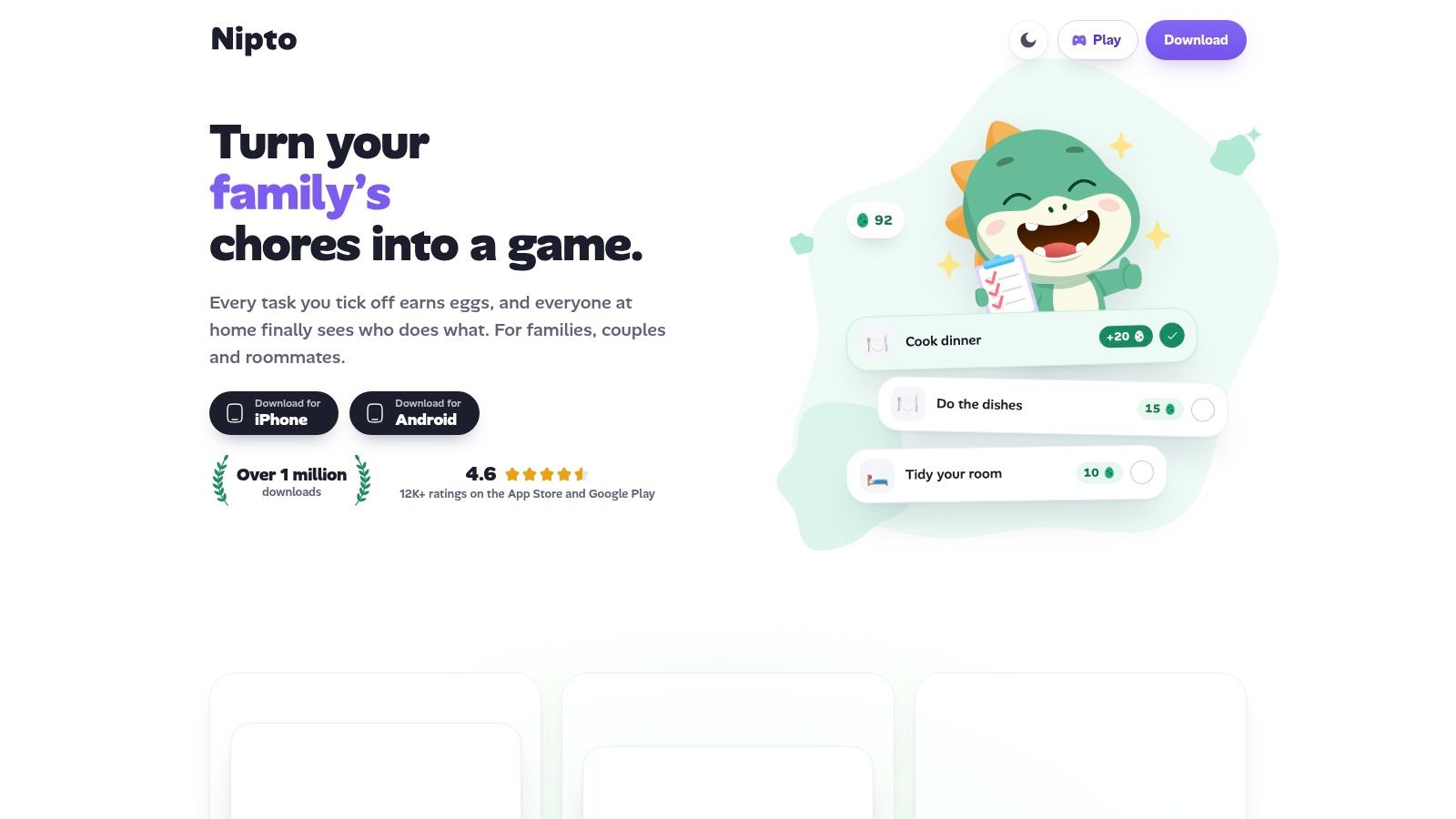
Nipto turns the week into a points game for families, couples, and roommates. You add custom chores, schedules, reminders, and points. Rotation follows who finished a chore last, so the same person doesn't inherit the bins forever.
Kids don't need their own phone. Parents run managed child profiles on a shared device, which is the ease test for a seven-year-old. The app is free on iPhone, Android, and the web. Unlimited planning and some other tools need Premium.
In 2024, 91% of U.S. parents who gave their children an allowance preferred tying it to completing tasks or chores, in LendingTree's survey of 1,181 parents. Nipto gives points and rewards, not a bank transfer. If your child only cares about cash in a jar, you'll still move the money yourself.
- Weekly races: Useful when everyone agrees to play. Exhausting when they don't.
- Individual goals: A calmer path than a household leaderboard.
- What it isn't: Not a room-cleanliness meter, and not a debit card.
I wouldn't put a weekly race in front of kids who already fight about fairness. Nipto is the pick when adults and kids can share one game and someone will open it.
5. Cozi
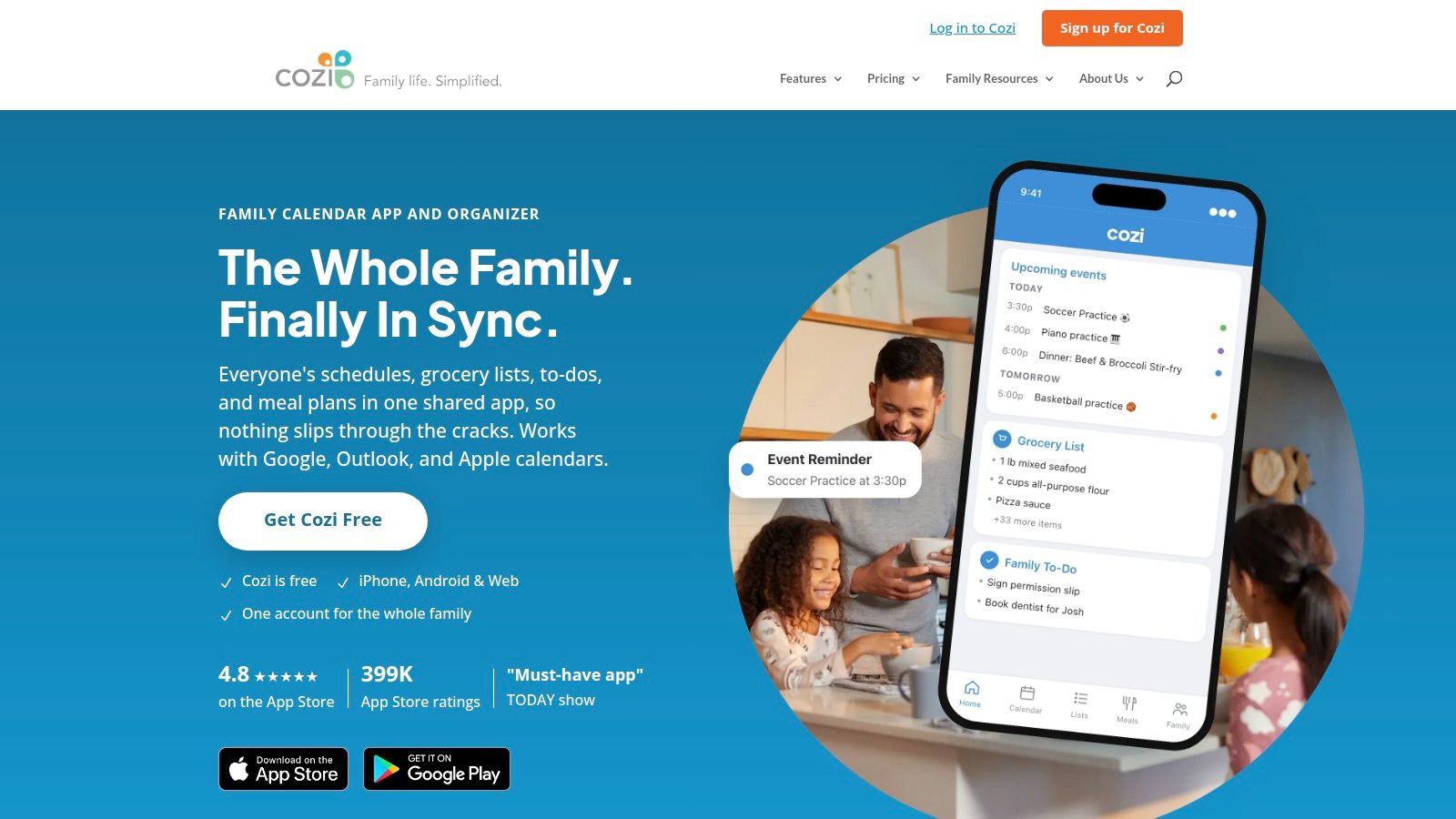
Cozi is the family organizer people already know. Calendars, to-dos, shopping lists, and recipes sit beside chore lists. You assign chores to family members and set them to recur daily or weekly in the mobile apps. One Gold subscription covers everyone in the account. The free plan includes shared calendars, lists, and recipes.
In 2024, 42% of mothers surveyed said they were primarily responsible for running the household and managing the family, in Motherly's State of Motherhood survey of nearly 6,000 mothers. Cozi helps that person put the week in one place. It doesn't specialize in room tracking or detailed rotation, and it has no kid reward loop.
Chores live in the mobile apps, which is awkward if you only manage the house from a computer. There's no pet, no allowance wallet, and no photo proof. If the fight is what's on Thursday and who has the bins, Cozi is enough. If the fight is whether the bathroom got cleaned, you'll outgrow it fast.
6. Flatastic
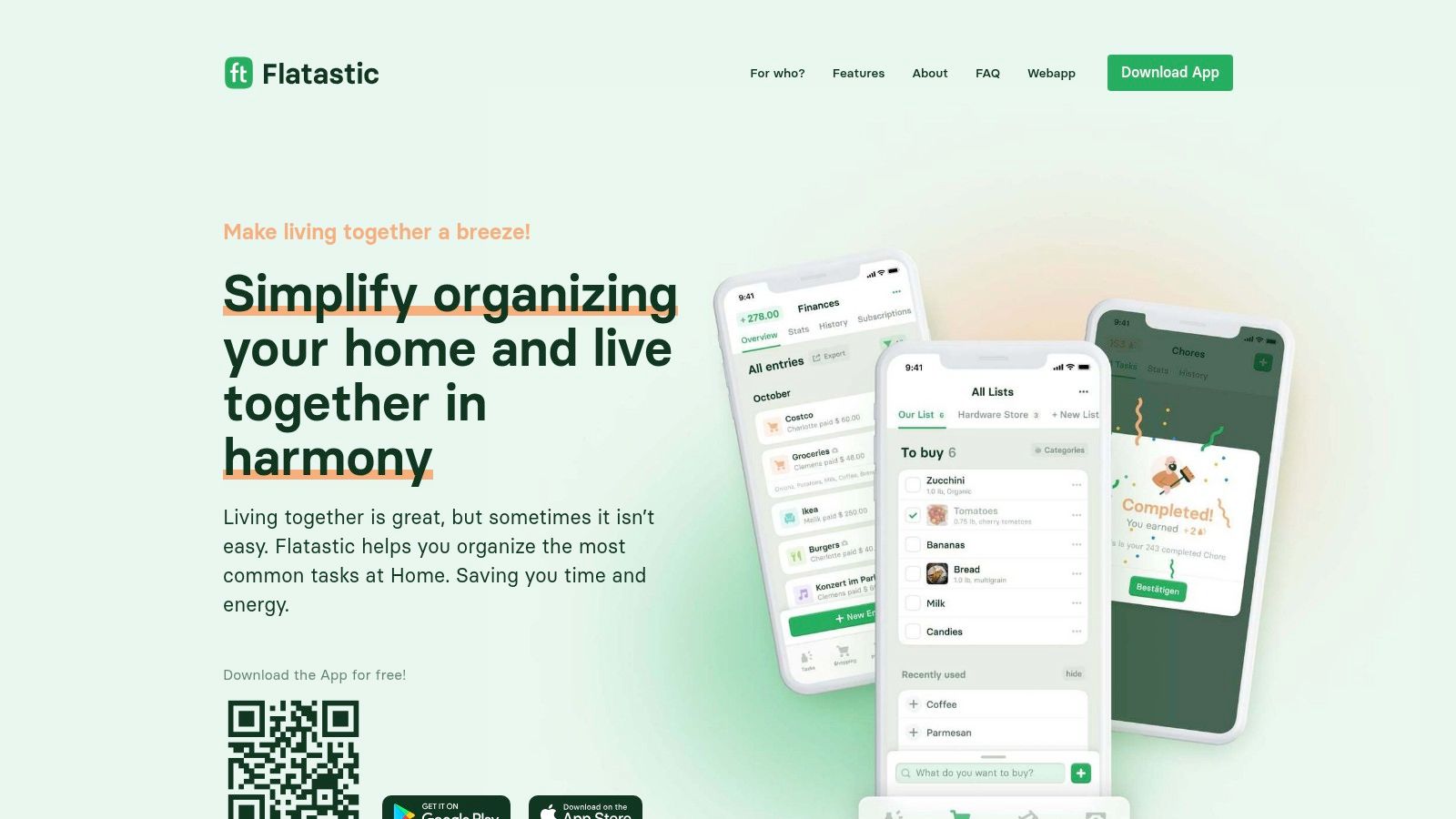
Roommates don't only argue about the bathroom. They argue about the shared olive oil and who paid for it. Flatastic puts recurring chores, reminders, and task rotation next to shopping lists, expense tracking, and a pinboard for notes. It's on iOS and Android.
It's free with in-app purchases, and the site offers Premium. The Google Play listing includes ads, and a user complaint cited how often they appear. Some users have also reported schedule or date issues, so run a week of due dates before you trust it with rent week.
For dividing a shared place without a family reward system, use this guide on how to split chores with roommates.
In 2024, 47.9% of respondents said household work was divided equally, while 30% said they personally performed most chores, in a Cinch Home Services survey of more than 1,000 people. Rotation plus a shared view is how you test that claim. Flatastic suits couples and roommates who need chores and admin together. A family of kids will find the pinboard less useful than a reward they chose, and it isn't an allowance app.
7. Homey
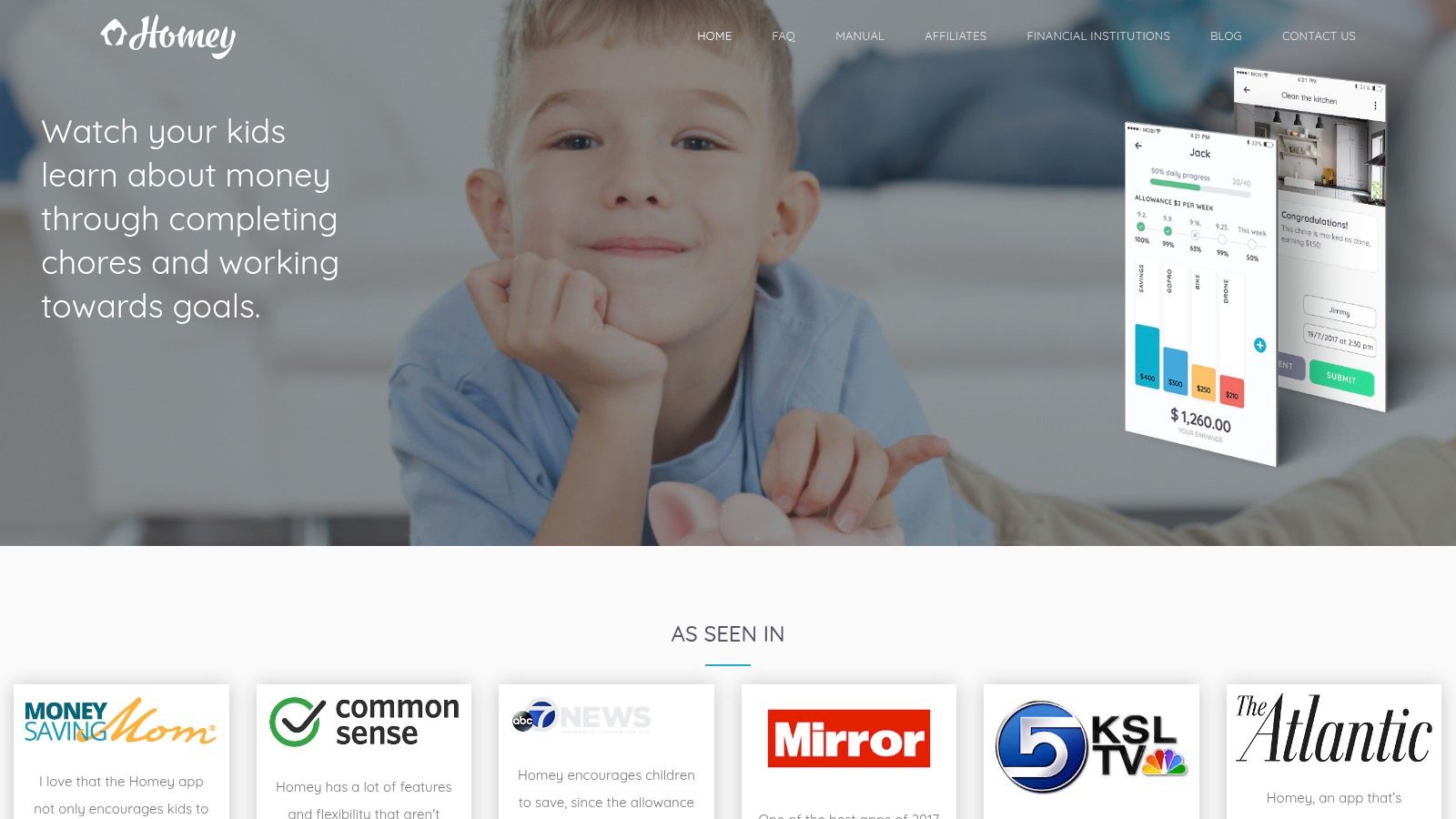
Homey connects the chore to the money. Assignments sync across devices, with notifications when tasks move. You can switch accounts on a shared tablet, so a younger child doesn't need a separate phone. Allowance, rewards, savings jars, and wallet tools live in the same place.
Core chores, allowance, and rewards are free for up to three accounts. A fourth person means a subscription. Premium prices vary by platform, so check them in the app before you commit a bigger household.
Mothers reported responsibility for approximately 73% of cognitive household labor and 64% of physical household labor, compared with 27% and 36% for their partners, in 2024 research from the USC Dornsife Center for Economic and Social Research involving 322 mothers of young children. An allowance ledger won't rebalance that planning by itself. It does give older kids a reason to mark the job done.
I recommend Homey when the reward your child cares about is money you already planned to give, and you're three people or fewer on the free tier. It isn't a cleaning-by-room system. Tying every small job to cash will feel wrong in houses that want contribution without a paycheck. Homey is the middle path between a sticker chart and a debit card.
8. DAKboard Family Chores
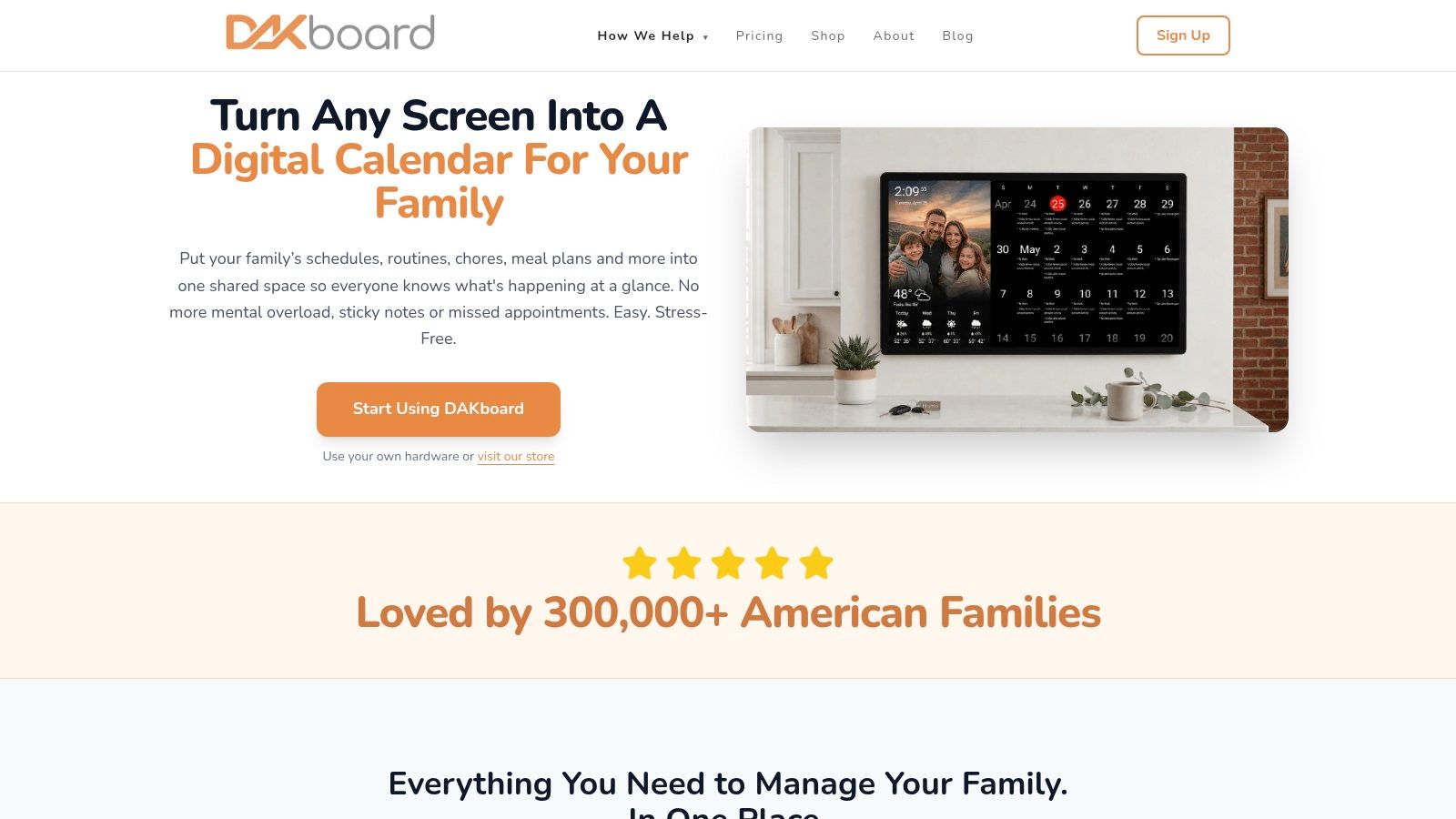
If nobody checks a phone, put the list on the wall. DAKboard Family Chores shows tasks in individual columns on a shared screen, such as a wall tablet or a DAKboard TouchHub. You can run one-time, repeating, and counter-based chores. Repeats cover daily, weekly, and monthly intervals. Points are optional and redeemable for rewards you define, or you turn points off and keep a checklist. Child Lock stops a kid from wiping the board, and chores can sync across connected displays.
The catch is the hardware and the plan. You need a TouchHub setup plus DAKboard Essentials or Plus. The documented maximum is six household members. This is a display, not each person's phone, so a parent at work can't treat it like a pocket app.
If the chart isn't visible while you're cooking, it isn't a chart. It's a file.
DAKboard Family Chores fits a household that will glance at one kitchen screen and doesn't want another app to learn. It doesn't fit a family larger than six, or parents who coordinate away from that display. There's no tutorial in the phone sense, because the board is the interface, but you do have to mount something first.
9. ChoreSplit
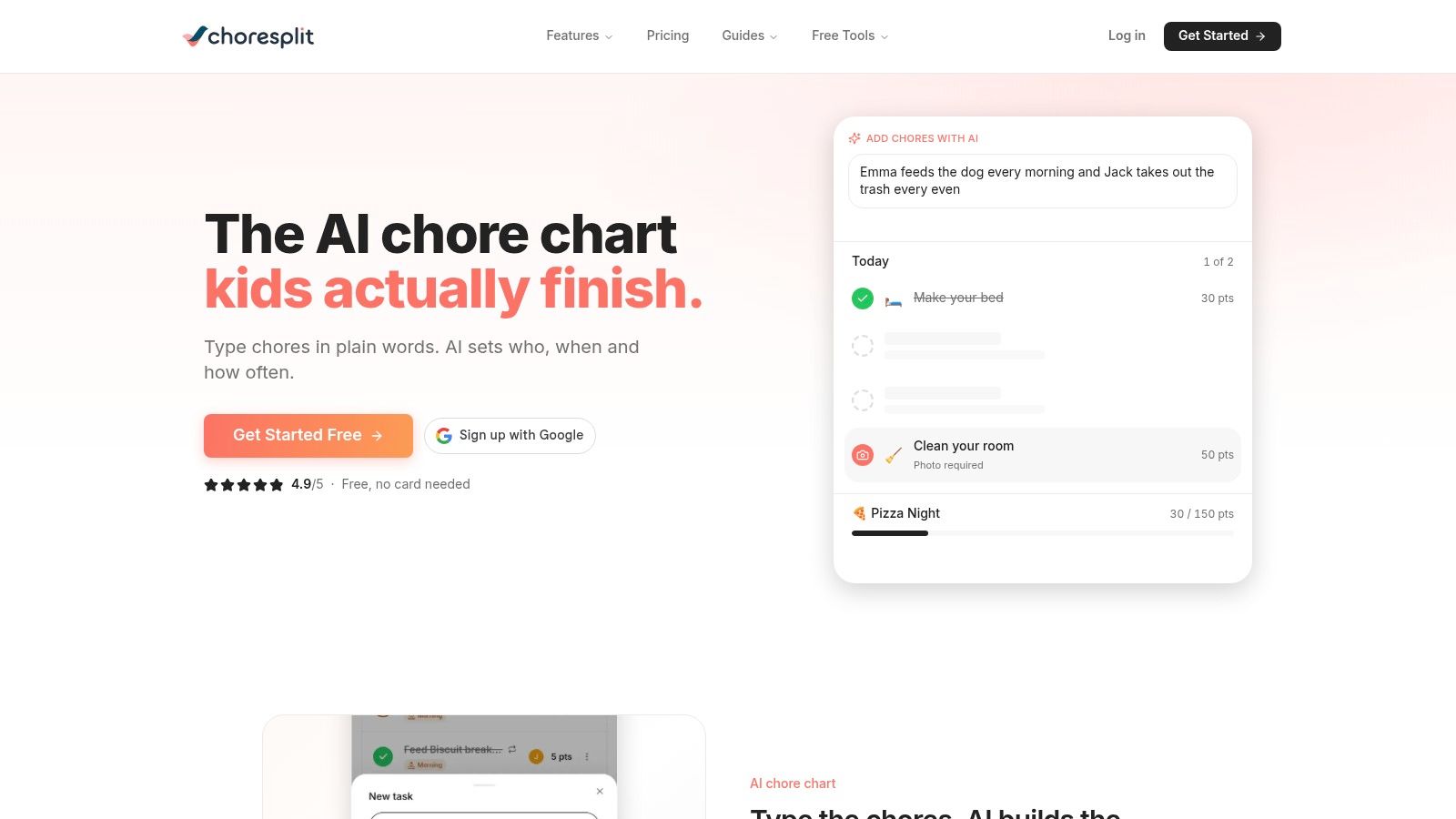
ChoreSplit is about proof. You assign daily or weekly chores, and children can submit a photo. Paid plans add AI-assisted checking and a parent review step. The listed free plan includes unlimited family members and chores. Plus adds points, streaks, leaderboards, and rewards. It also supports two-household arrangements, which matters when kids split the week.
A study of 5,024 children aged 8 to 17 in Ghana found that 90.4% participated in household chores, with slightly higher participation among girls than boys, in this Humanities and Social Sciences Communications paper. Participation that high is ordinary. Turning every job into camera evidence is not. A photo of a made bed helps a co-parent across town. A requirement to photograph a child's room for small tasks can feel like surveillance, and older kids will say so.
For a shared list without photo checks, look at shared chores across the household. Trial the paid AI review before you rely on the price. ChoreSplit suits co-parents who can't see the house and younger kids who need a clear "show me." It isn't the calm option for a trust-based household.
10. Famiyo
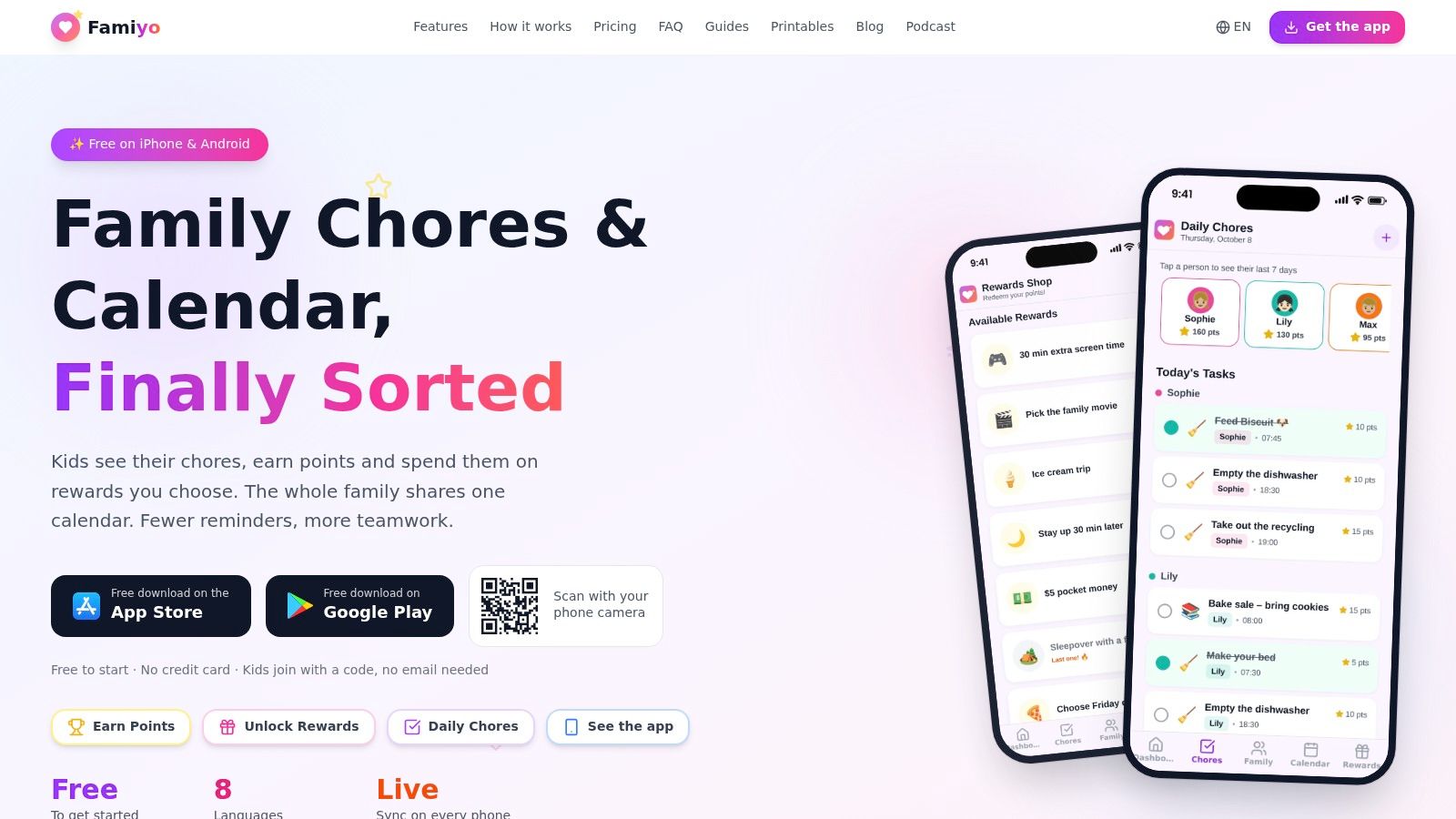
Famiyo is built for parents and kids, not roommates. A shared calendar holds recurring events. Chores carry points into a rewards shop you configure. You can require approval before a child's chore counts as done, and two parents can both be administrators. A child joins with a code. No email, no password, no tutorial about accounts.
Read the free plan twice. It stops at three family members and one repeating task. One recurring job won't run a real week, so most families will hit Premium quickly. Premium bills through the app stores, so confirm the current price there rather than trusting an old screenshot.
A 2023 analysis of nationally representative Bangladesh MICS-2019 data on 39,509 children aged 5 to 17 found that approximately 58% participated in household activities, and about 69% of those participating children were girls, in Child Indicators Research. Rotating assignments, instead of default "girl jobs," is how a points shop avoids copying that split. Famiyo is easy for a young child to enter. It isn't generous while you're testing, and a couple with no kids won't get much from the shop.
Family Chore Apps Compared by Cost, Sharing, Rewards, and Best Fit
| Item | Free plan | Shared household tasks | Kid rewards | Best for |
|---|---|---|---|---|
| Benny | Core scheduling, reminders, timers, and shared chore lists are free; ads included | Shared assignments, recurring chores, and completion tracking | Sponge Points and a virtual hamster with unlockable accessories | Recommended for playful, flexible shared chore routines |
| Sweepy | Free version; custom chores included, automatic daily checklists require Premium | Room-based cleaning plans, household sharing, and family leaderboard | Difficulty points and parent approval for children's tasks | Families building room-by-room cleaning routines |
| Tody | Free solo version; household sharing requires Premium+ | Paid plans add syncing, chore assignment, and contribution balancing | No specific child-reward features listed | Individuals or households seeking flexible cleaning intervals |
| Nipto | Free on iPhone, Android, and web; unlimited planning requires Premium | Shared chores, automatic rotation, and weekly competition | Individual goals and rewards | Families, couples, or roommates who enjoy points and friendly competition |
| Cozi | Free plan includes shared calendars, lists, and recipes | Assignable chores with daily or weekly recurrence in the mobile apps | No specific child-reward features listed | Families wanting chores alongside calendars and household planning |
| Flatastic | Free with in-app purchases | Recurring chores, reminders, task rotation, shopping lists, and expenses | No specific child-reward features listed | Roommates or couples coordinating chores and household administration |
| Homey | Core chores, allowance, and rewards free for up to three accounts | Chore assignments, syncing, notifications, and shared-device account switching | Allowance, rewards, savings jars, and wallet features | Families connecting chores with allowance management |
| DAKboard Family Chores | Requires DAKboard Essentials or Plus and a compatible setup | Shared-screen chore columns for up to six members | Points redeemable for family-defined rewards | Families displaying chores on a shared wall screen |
| ChoreSplit | Listed free plan includes unlimited family members and chores | Scheduled assignments and photo-based completion evidence | Points, streaks, leaderboards, and rewards on Plus | Families wanting free chore tracking with optional completion review |
| Famiyo | Free plan limited to three family members and one repeating task | Shared calendar, chores, and parent approval options | Points and a configurable rewards shop | Families seeking a shared calendar with child-focused rewards |
Choosing the App Your Family Will Still Use in Month Three
Start with who has to see the list. If everyone has a phone, a shared in-app home is enough. If the only reliable screen is the fridge tablet, a wall display beats another notification nobody taps. If one parent manages two houses, both adults need the same plan, not a chart stuck on one device in one kitchen.
Then decide the reward, and be honest about the child in front of you. A checklist with no points is kinder in a house that's tired of competitions. A virtual pet works for younger kids who like a character. Points spent on screen time or a sleepover work when the child helped choose the prize. Cash and savings jars work once the child cares about money. Don't stack a leaderboard on siblings who already keep score in the car.
Setup is the filter that kills week two. If you won't enter every room tonight, skip apps that need a whole-home cleanliness model before they're useful. If you won't buy hardware, skip the wall board. If a second person can't edit the live plan without Premium, assume you'll hit that paywall on day one and price it now.
Run your top two on the same recurring jobs for one week. Use the bins, the table, one bathroom job, and one bedroom reset. Don't add fifteen new chores to make the app look busy. At the end of the week, ask who opened it without you asking, whether Tuesday's job came back by itself, and whether anyone argued about the reward. Keep that app. Delete the other.
Unpaid domestic work represented 28.8% of the Basque Country's GDP in 2023, equivalent to €26,856.5 million, with women contributing 63.5%, according to the Basque Office of Statistics. You don't need a regional GDP figure to know the work is heavy. You need a tool that still shows an owner in month three, when the novelty is gone and someone is sick or away.
I would rather have a plain recurring list people use than a reward system nobody opens. Match the reward to the child, put the paywall in the decision today, and stop switching apps every Sunday.
Benny gives your household one shared chore list and schedule, with room-based tasks, timers, reminders, and recurring jobs that come back on their own. Sponge Points and a virtual hamster are there if a child wants a small reward, and the core schedule stays on the free app. If that matches the four fights in your kitchen, start with Benny.
Generated with Outrank tool